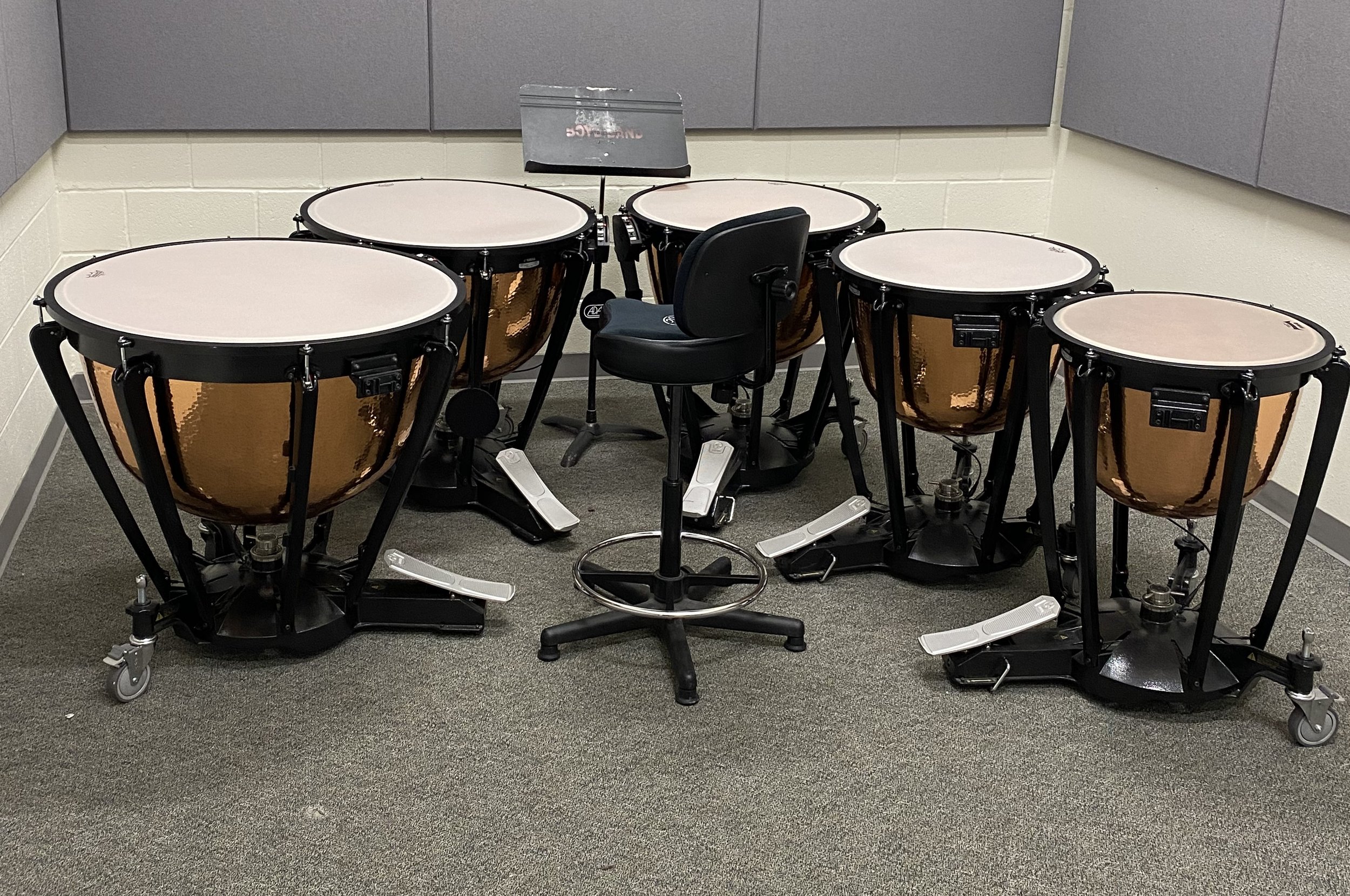
Timpani that are not in working condition put pressure on performers. A pedal that sticks, a gauge that reads wrong, a rattle that appears on the resonant pitch — each of these takes mental bandwidth away from the music. Most of them are preventable with annual maintenance. This covers what that maintenance involves and how to recognize when something needs attention between visits.
What annual maintenance actually covers
Lubricate moving parts
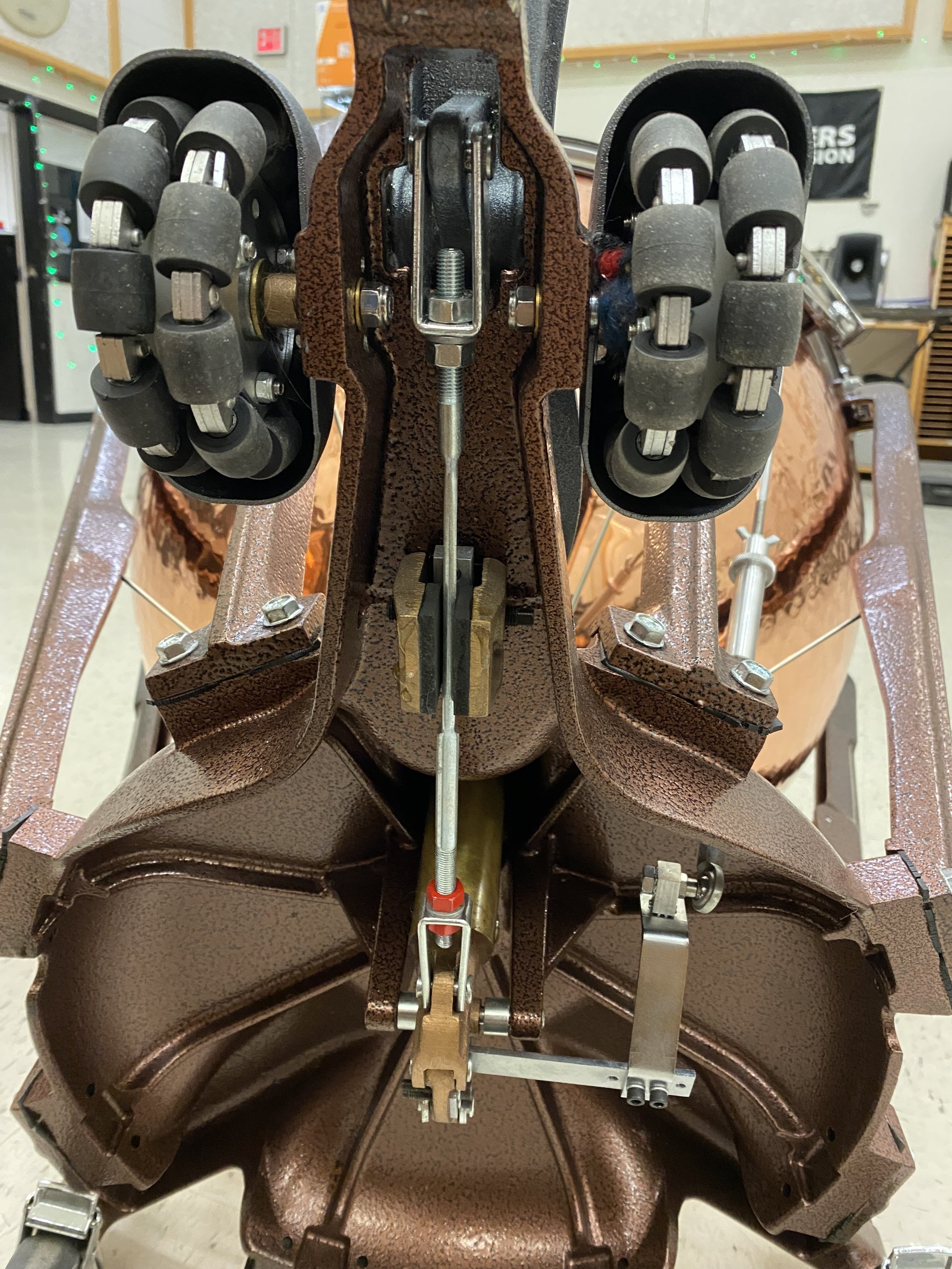
Apply white lithium spray to all frequently-moving joints: pedal linkage points, caster pivots, and tuning rod casings. White lithium is preferred over WD-40 because it stays where you put it rather than migrating into the bowl finish. Keep lubricant away from the bearing edge and the bowl itself.
Set the range of your drums
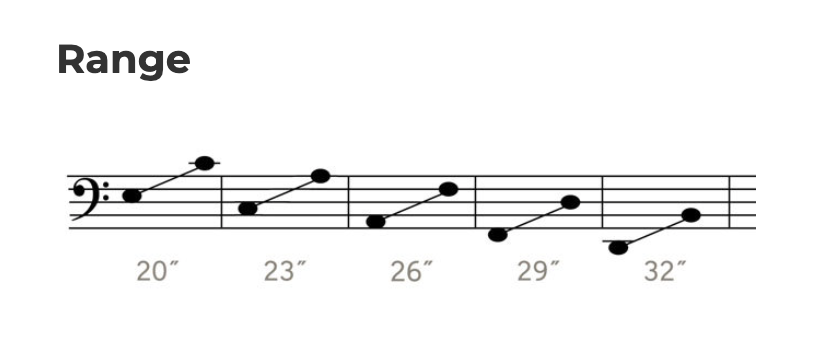
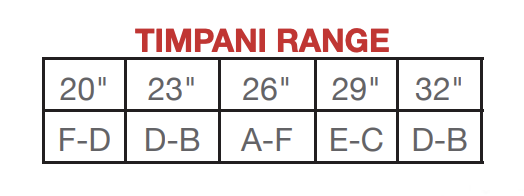
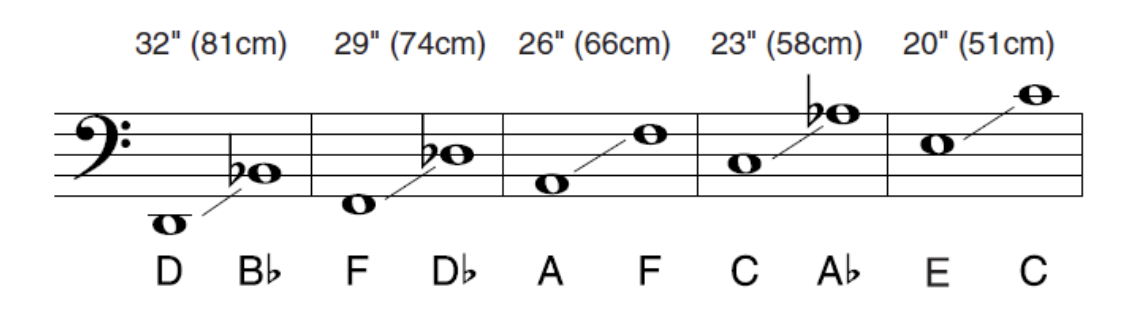
Adams, Ludwig, and Yamaha specify tuning ranges for each drum size. Over time — and especially after a head change — these ranges can drift. Setting the range from the bottom pitch up ensures the drum operates where it is designed to operate and gives you the full range on either end.
Clear the heads
Clearing means matching pitch across all tension rods. Find the highest-pitched rod, then bring all others to match it. This is different from tuning the head to a specific pitch — clearing is about consistency across the drum, which is what allows the pedal and gauge to track reliably.
Pedal and gauge adjustments
Pedals should move smoothly through their full range without sticking or catching. If a pedal holds pitch in the middle of its travel but slips at the extremes, the mechanism likely needs adjustment — and if adjustment does not resolve it, timpani repair is the next step. Gauges should be calibrated before each performance season — a gauge that reads consistently wrong is more disorienting than no gauge at all.
Clean hair and debris from wheels
Hair and fine debris accumulate in caster wheels and eventually bind them. A vacuum or compressed air clears most of it. Casters that have been bound for a season typically need lubrication after cleaning to roll freely again.
When to change the heads
There is no fixed interval that applies to every drum in every setting. Watch for these signs instead:
Worn playing spot. Repeated mallet strikes wear through the head's coating in a visible circle. Once that spot has worn through, the head's response is uneven — it plays differently depending on where you strike it.
Hard to keep in tune. If you have cleared the head properly and the drum still will not hold pitch, the head has likely stretched beyond the point where clearing fixes the problem.
Range has changed. When a set of timpani begins to produce more than an octave of range per drum, the heads have typically stretched significantly. You will gain range back after replacement.
In school settings, plan to change heads every 2–5 years. In church settings, where drums are used less frequently, every 5–10 years is more typical. Most school programs wait longer than they should — the performance difference after a head change on 6-year-old heads is noticeable immediately.
How to store pedals
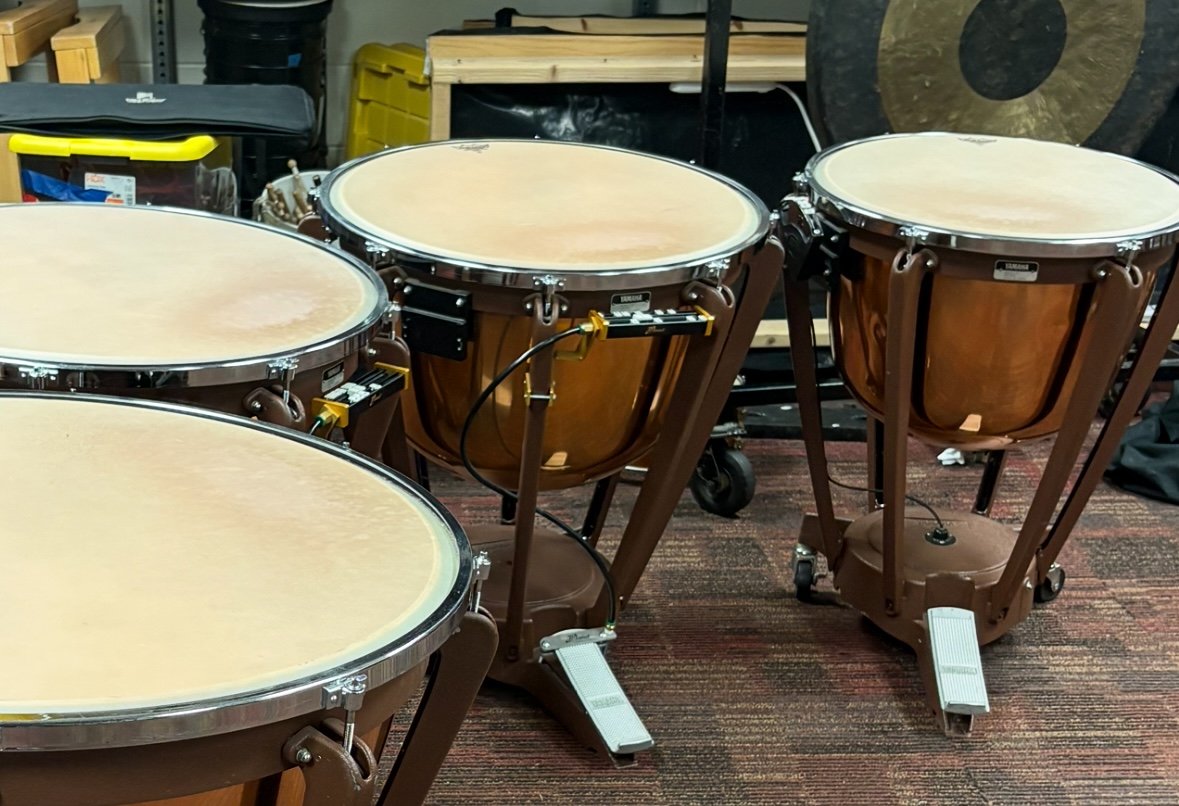
Store timpani with pedals 1/3 to 1/2 of the way up. Fully relaxed storage puts the linkage under no tension and allows it to rattle during transport. Fully tensioned storage stresses the spring mechanism over time. The middle position keeps enough tension on the parts to hold them in place without wearing anything out.
Rattle troubleshooting
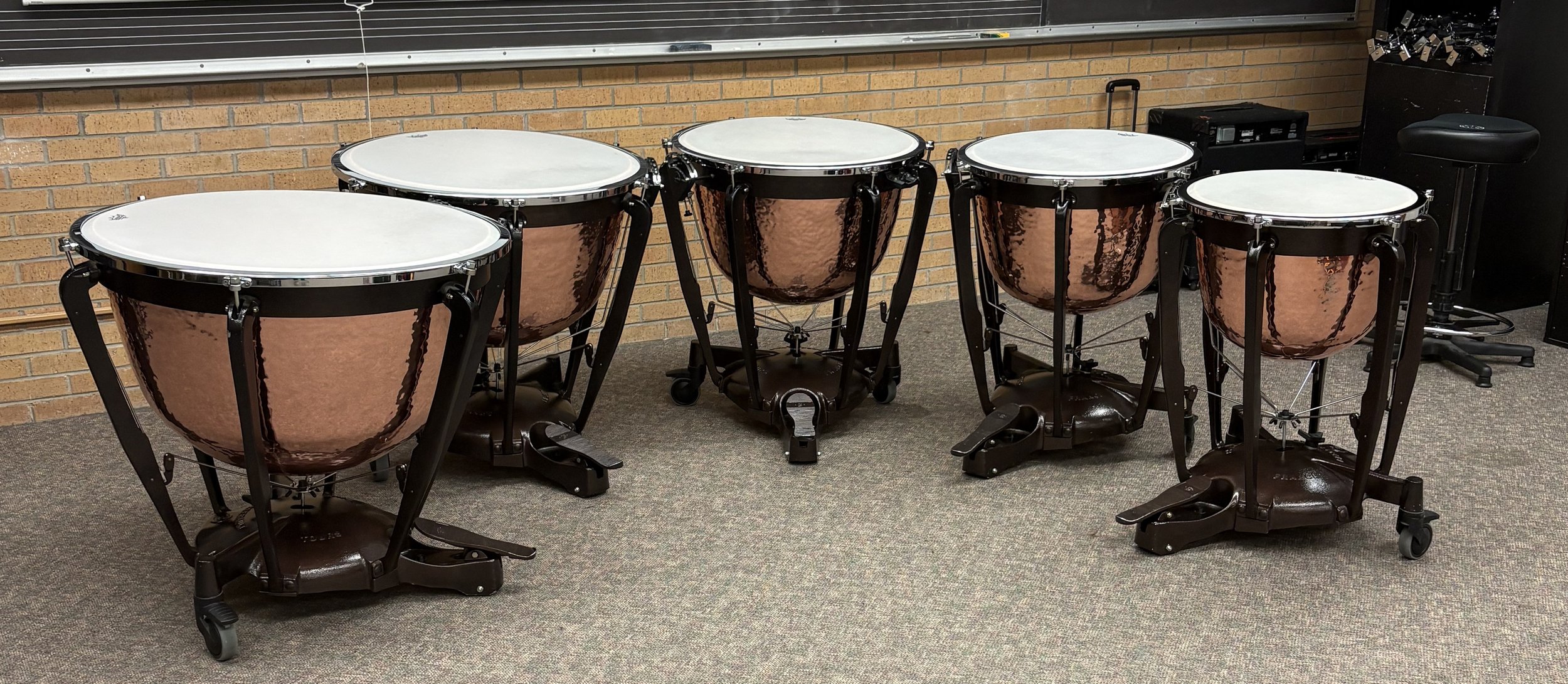
Rattles on timpani are common and usually have one of three sources:
Joints and linkage points. Dirt accumulates where tension rod casings meet the kettle rim and at pedal linkage points. A thin application of lubrication typically stops this immediately.
Spider arms. On chain-driven drums, friction between the spider assembly and the bowl material causes a scraping rattle. Teflon spray applied where the arms contact the bowl is the fix.
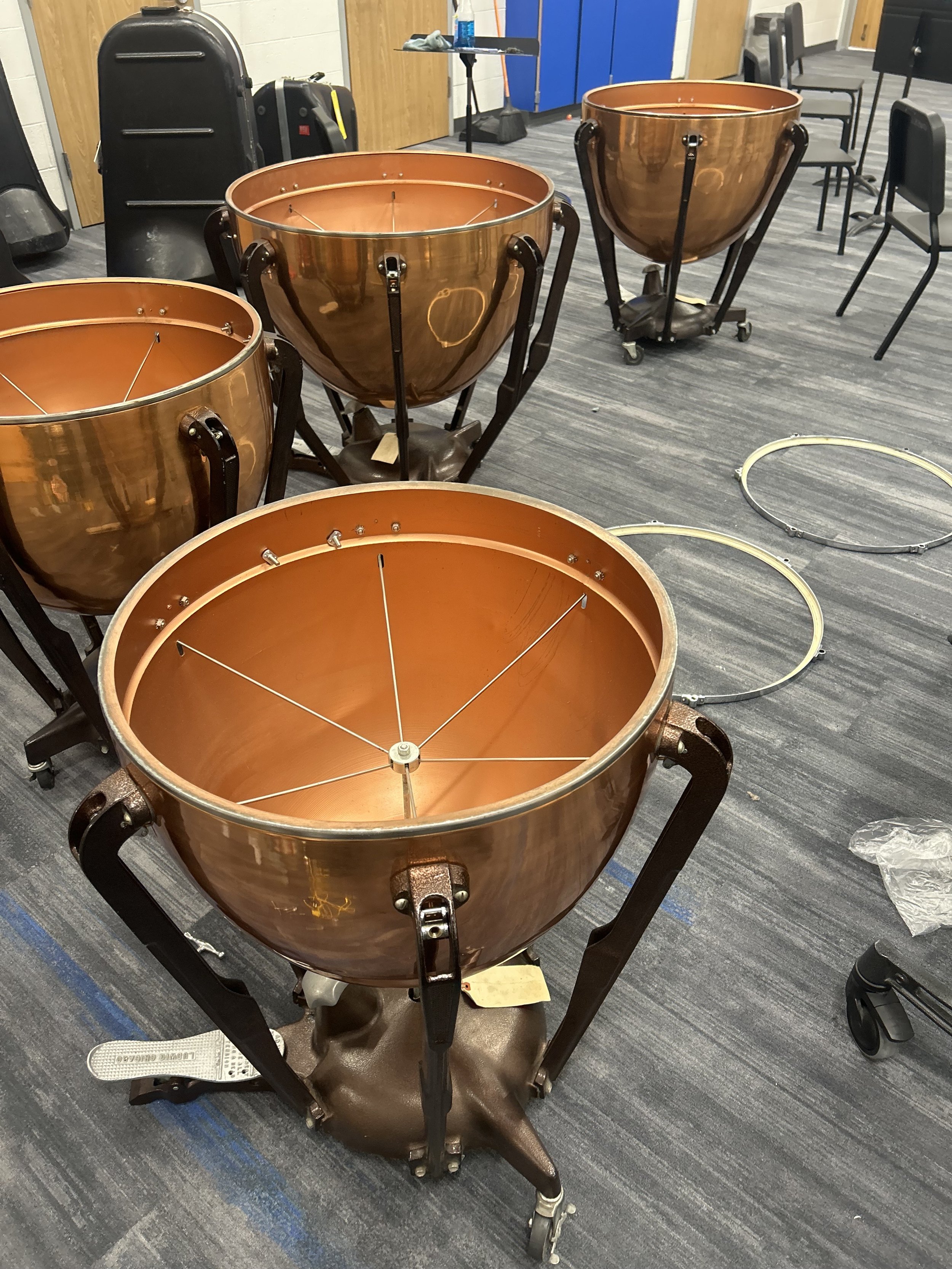
Counter hoops. The head insert and the counter hoop can vibrate against each other, particularly on drums with older heads or counter hoops that have been removed and reinstalled multiple times. A thin application of Teflon spray between the insert and the hoop resolves it without affecting tone.
If you have worked through all three and the rattle persists, get in touch. Some rattles require hands-on diagnosis.