Getting the wrong timpani head is expensive and correctable, but also entirely avoidable. Three decisions — size, coating, and insert material — cover everything you need to order correctly the first time. Here is how to work through each one. For the full care picture beyond head selection, see our essential timpani care guide.
Part 1: Determining the correct size
Identify your drum category
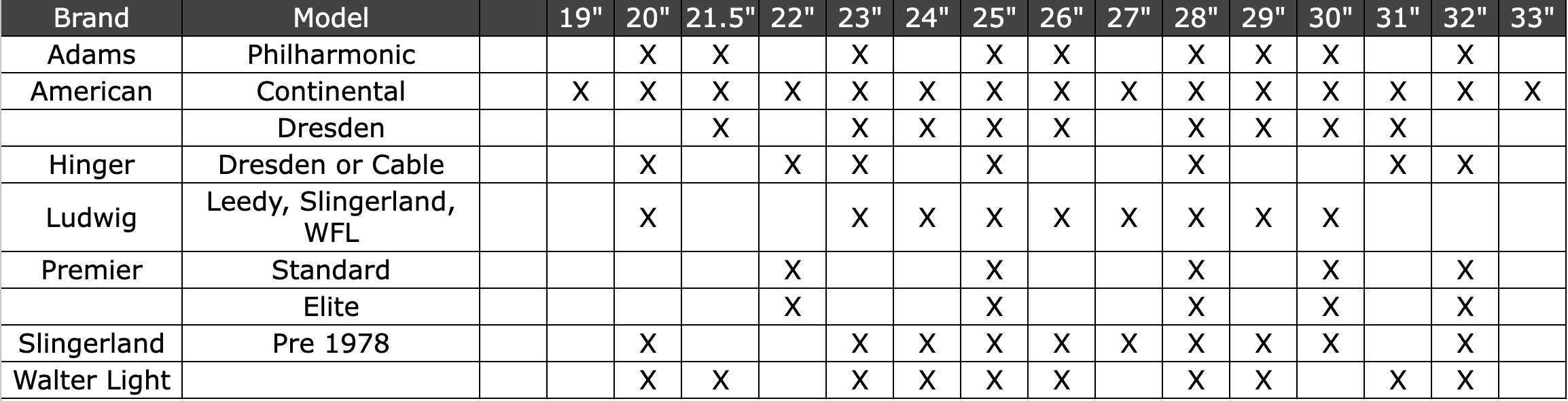
Modern timpani (post-1978 Adams, Ludwig, Majestic, and Yamaha) are Extended Collar drums. Standard sizes are 32", 29", 26", 23", and 20". If your drums were manufactured after 1978 by one of these makers, you are almost certainly working with extended collar drums, and you can go directly to the standard sizes.
Pre-1978 drums and some specialty manufacturers use Regular or Standard Collar heads. These require measurement.
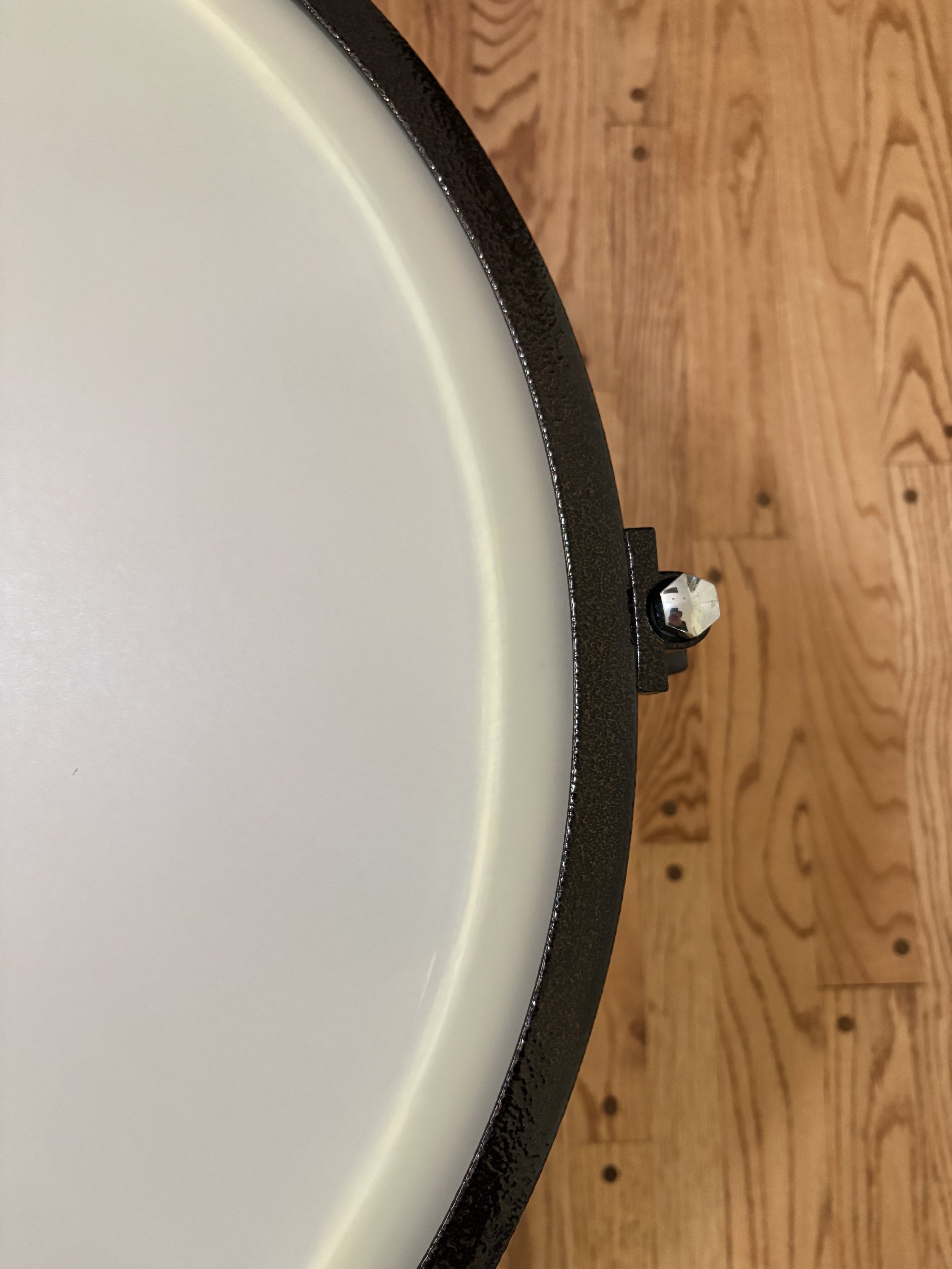
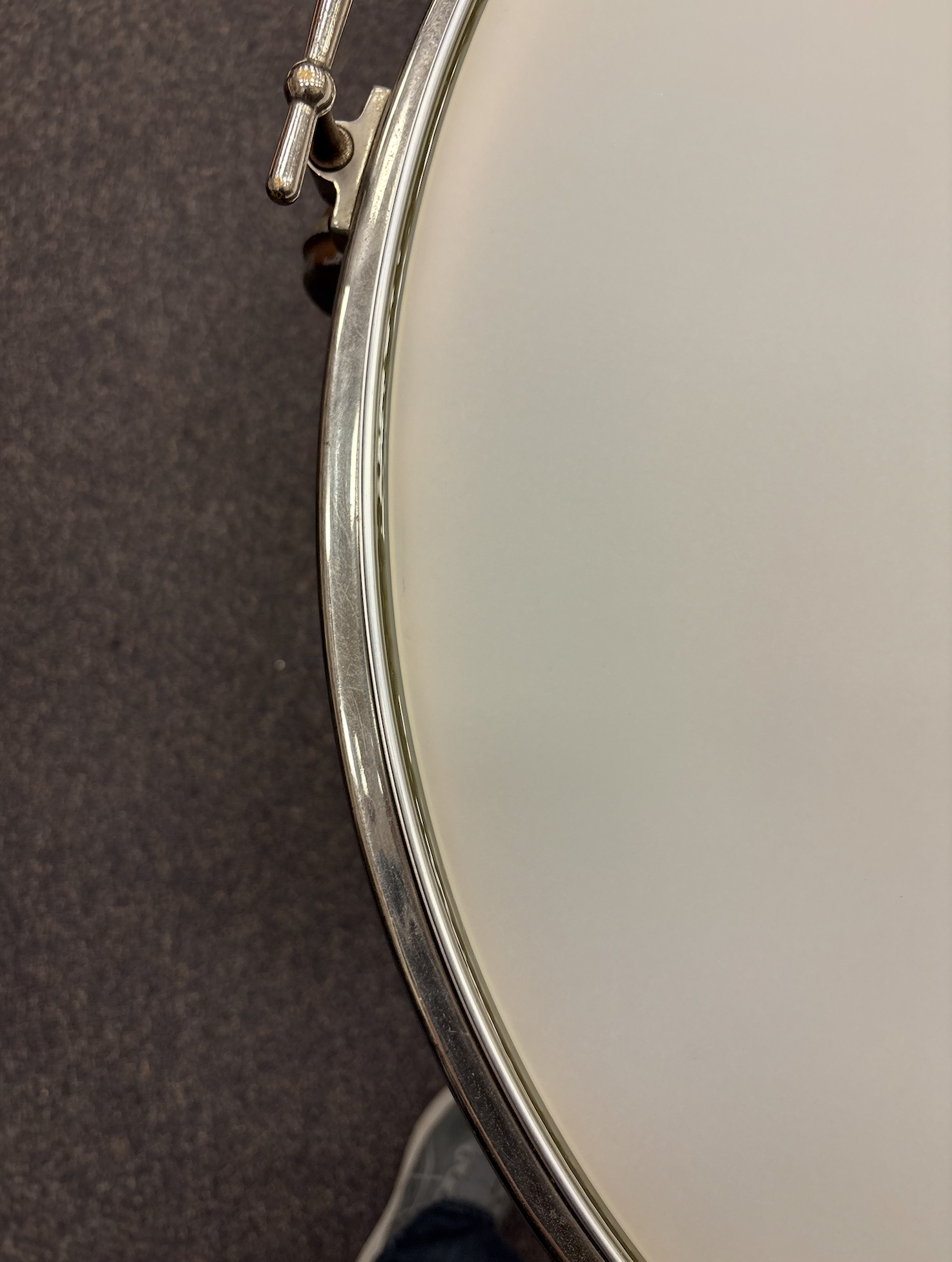
How to measure
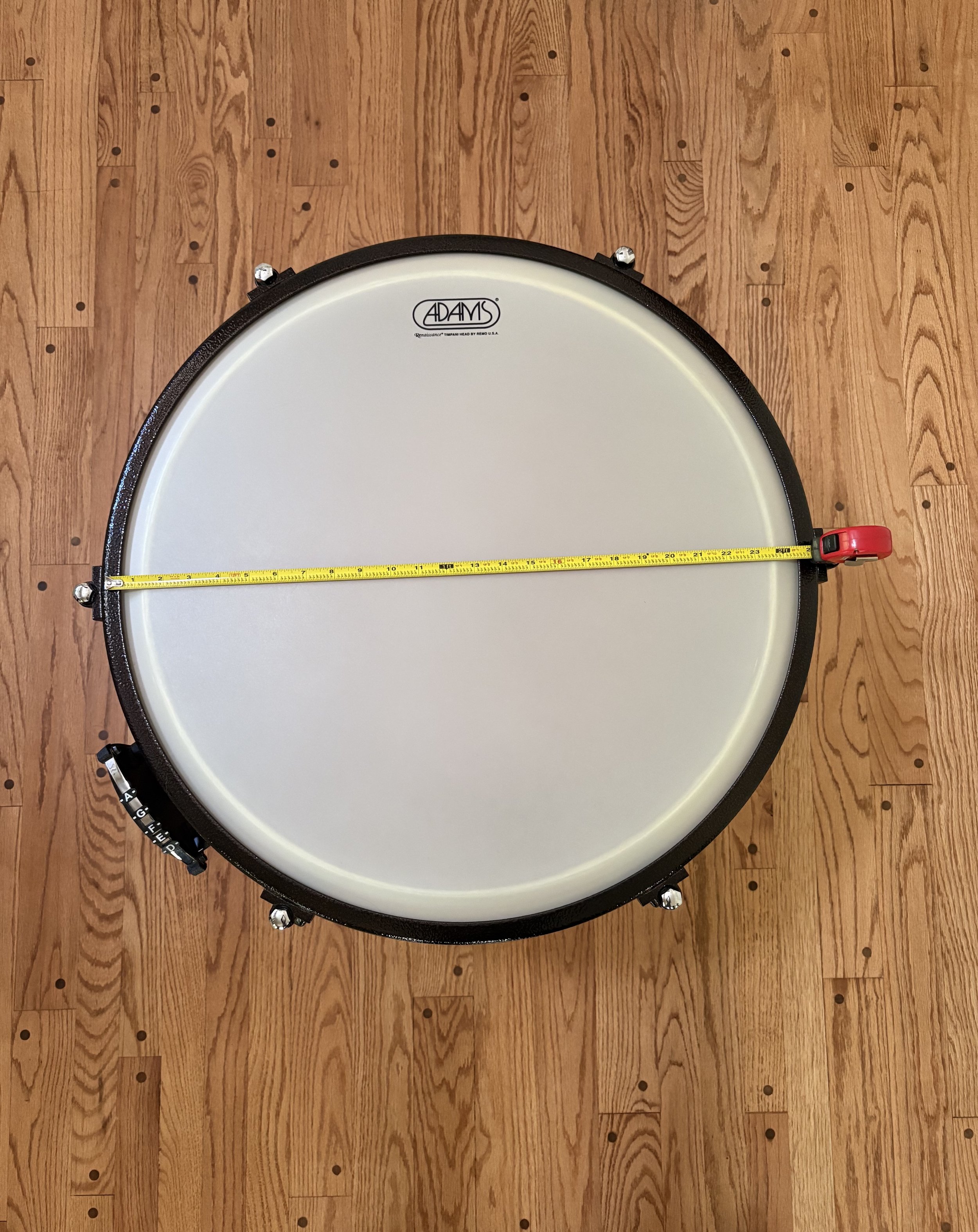
Measure the bearing edge — the rim of the kettle where the head sits — from one side directly across to the other. Round up to the nearest whole number. Do not measure the existing head. Do not measure the counter-hoop. Measure the bearing edge.
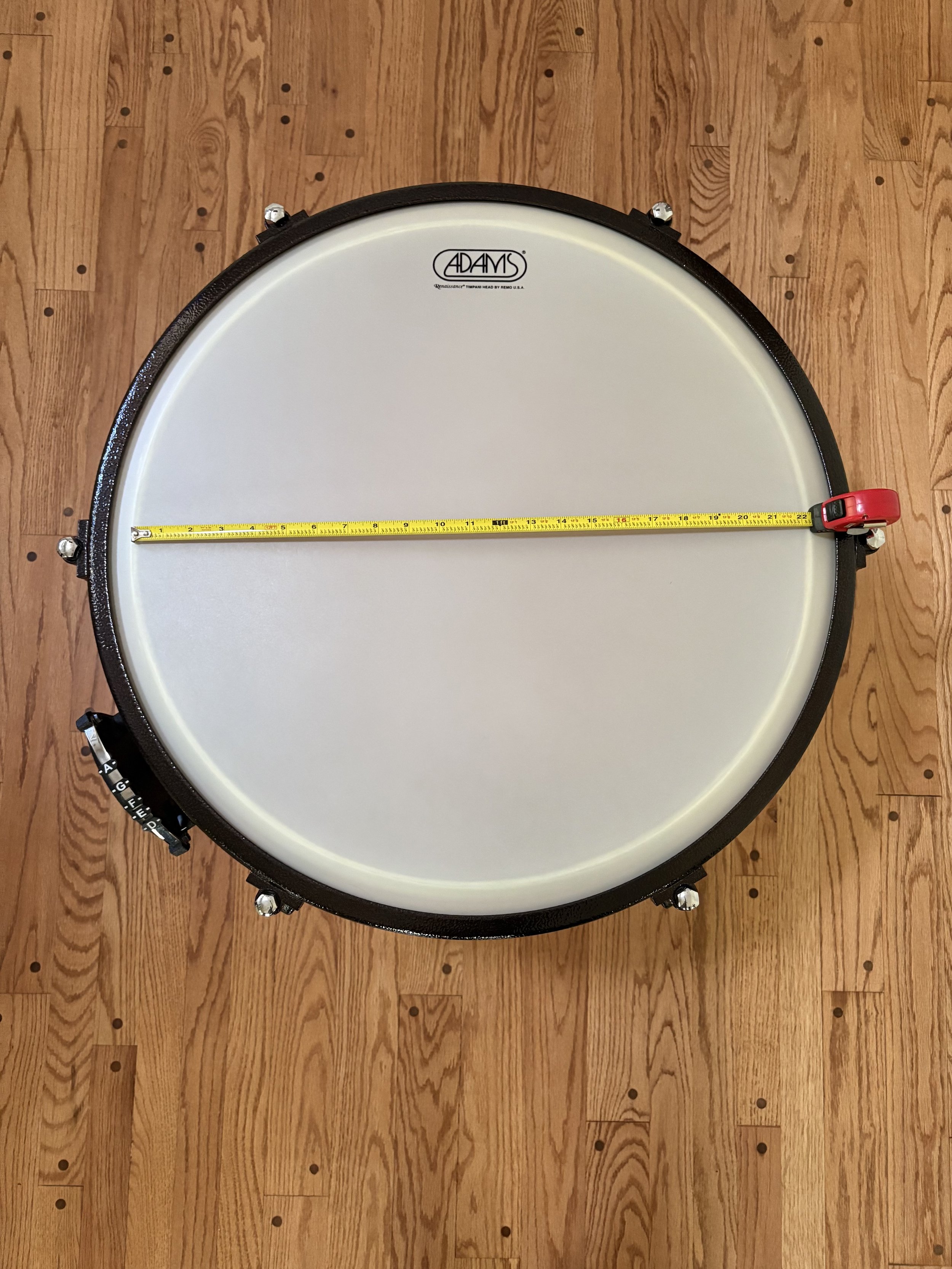
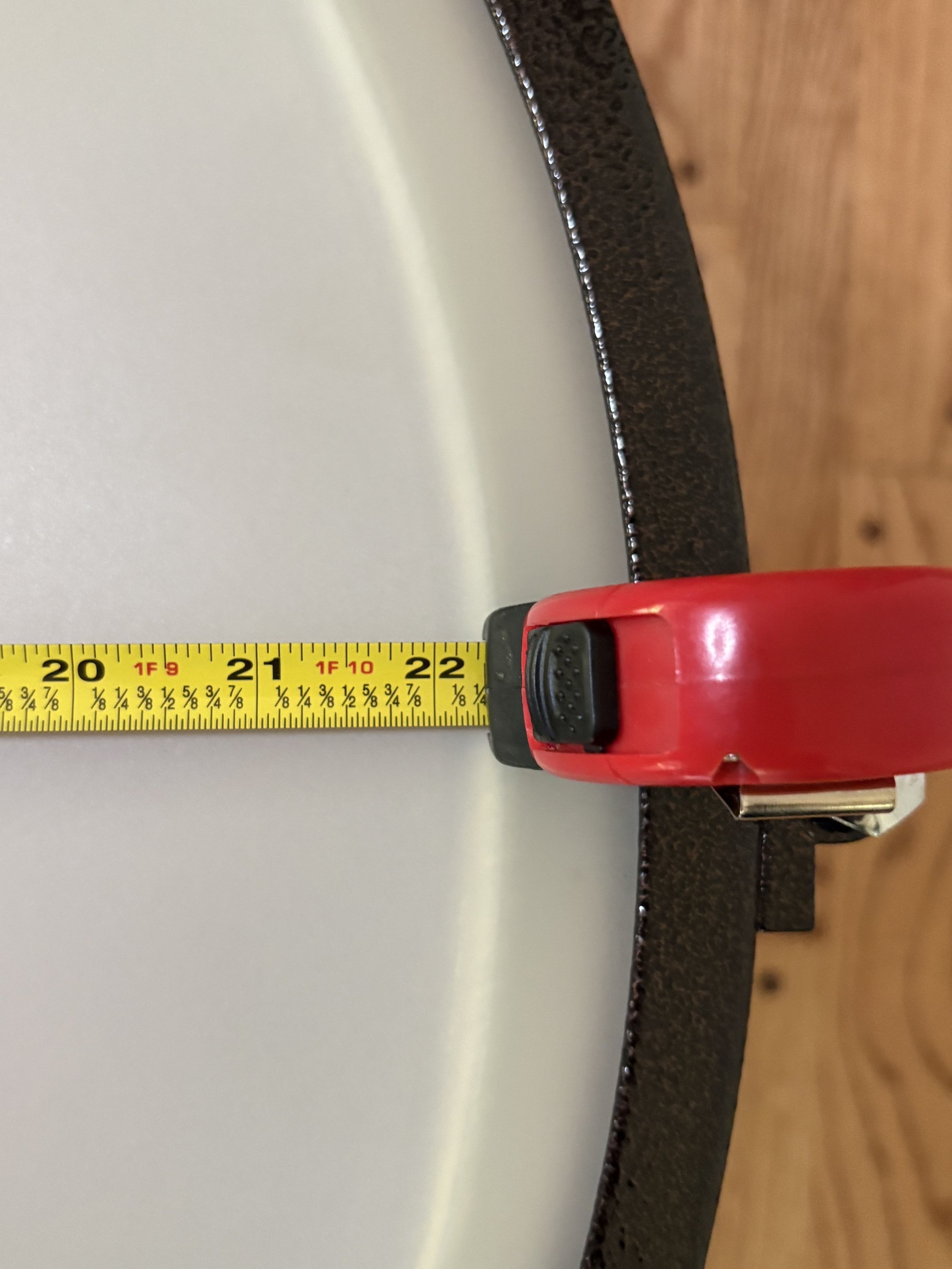
How the size translates to a head order
Extended Collar drums need heads that measure 2 inches larger than the bowl size. A 26" drum gets a 28" head. A 29" drum gets a 31" head.
Regular/Standard Collar drums need heads that measure 1 inch larger than the bowl size. A 26" drum gets a 27" head.
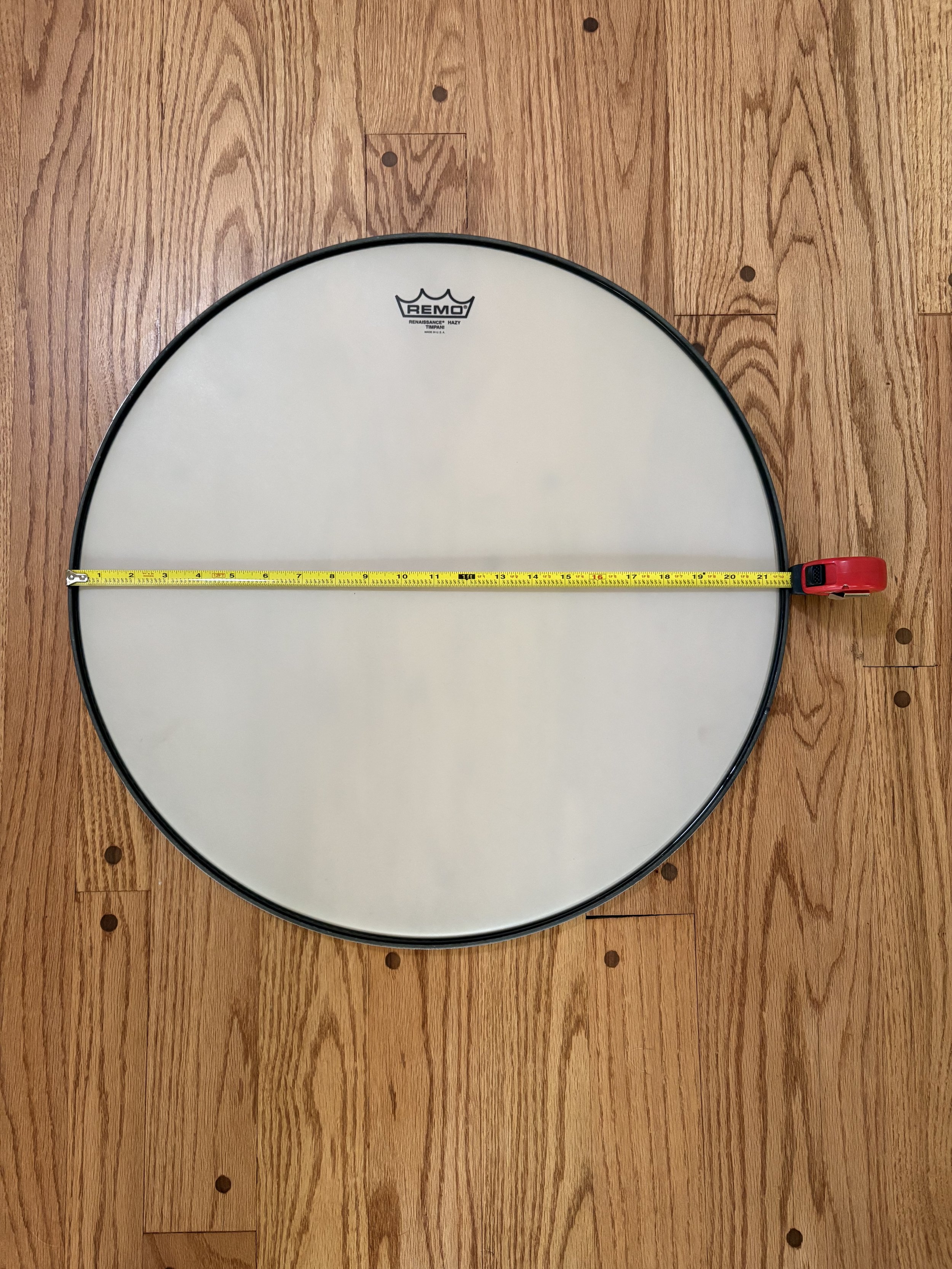
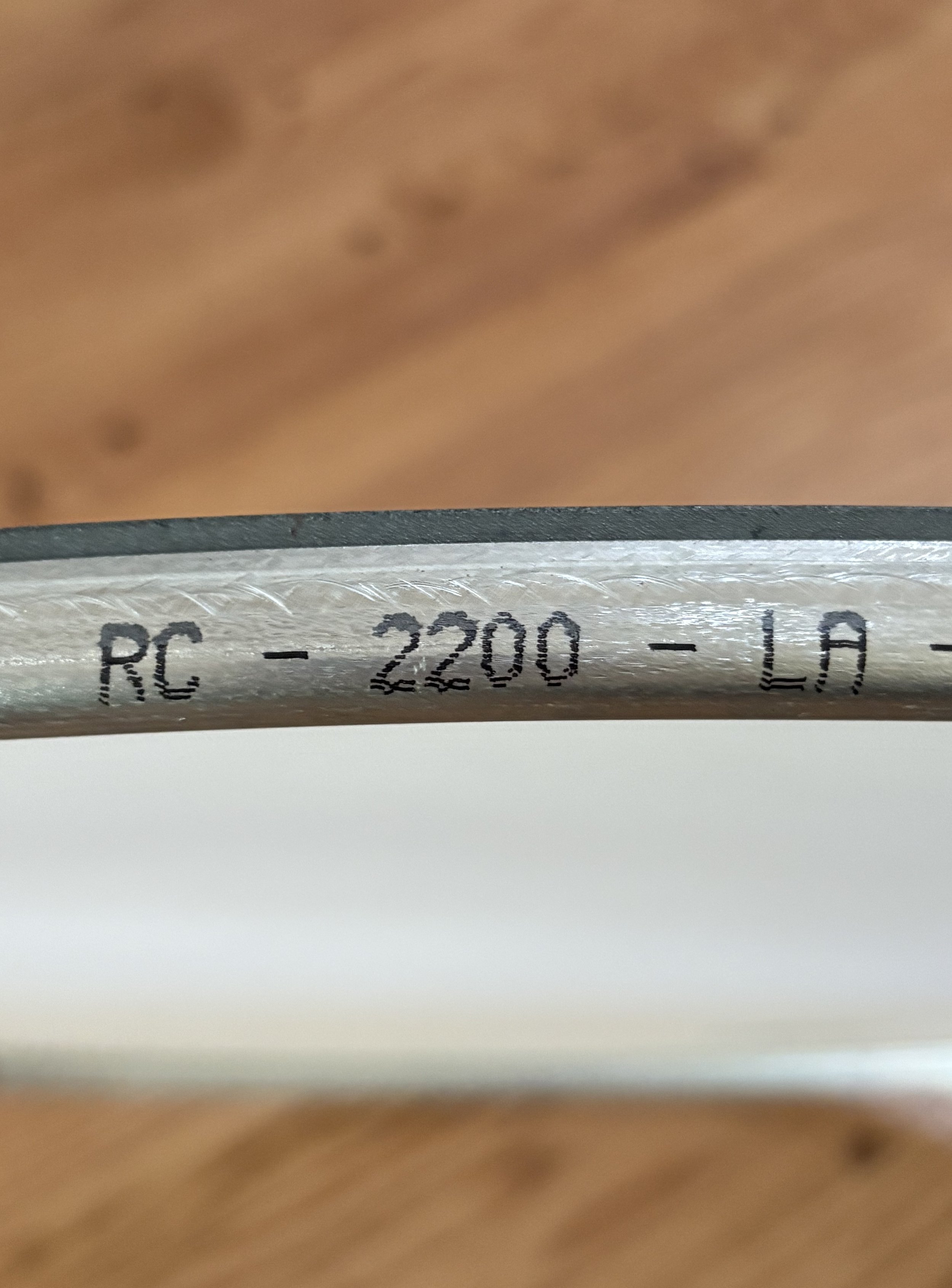
If you are not certain which collar type you have, three shortcuts: measure the existing head with a tape measure (full diameter including the flesh hoop), measure the inside diameter of the counter-hoop, or check the model number printed on the flesh hoop of the existing head — it usually contains the size.
Part 2: Coating — clear or hazy
Two options. They produce meaningfully different sounds.
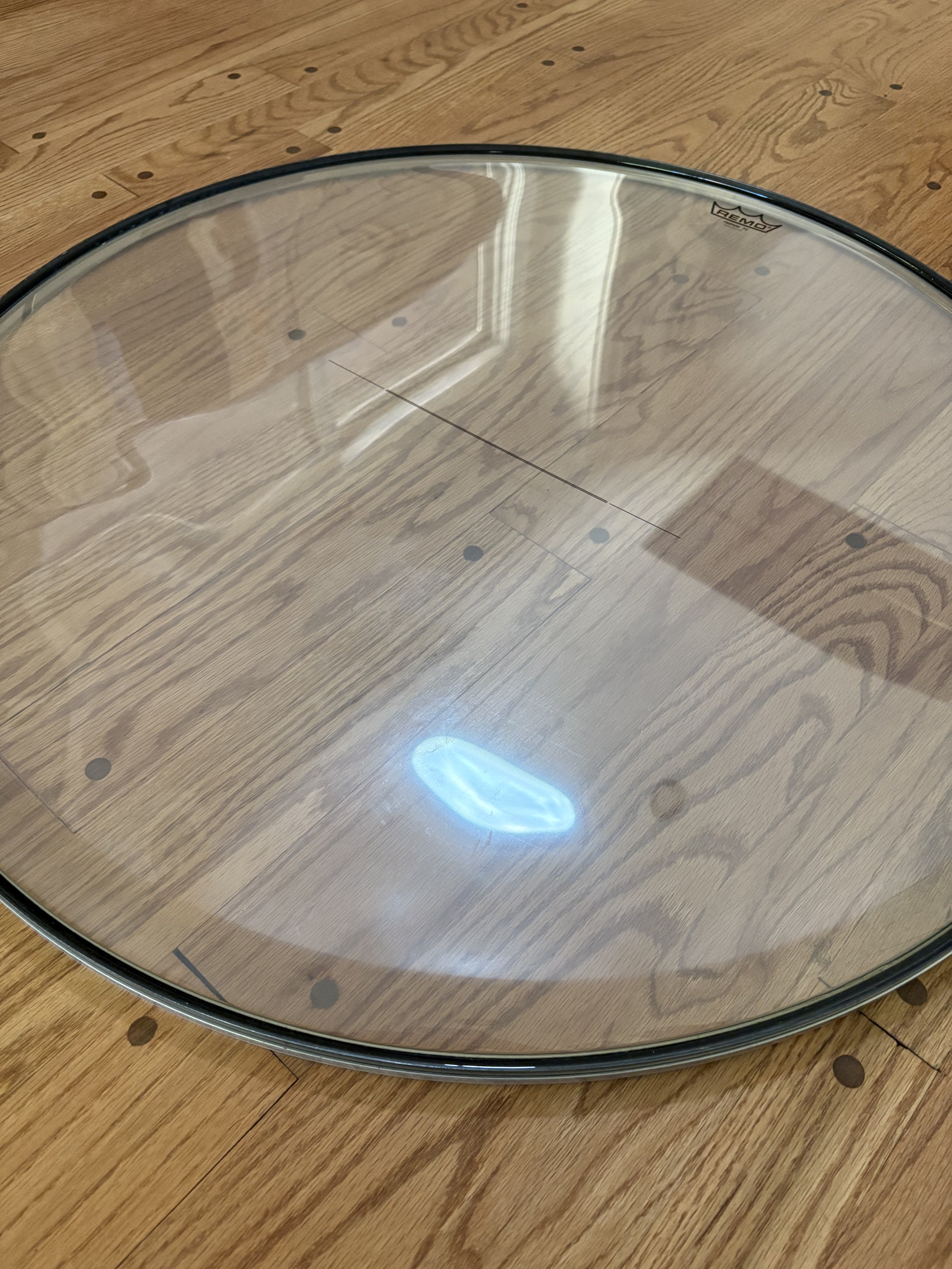
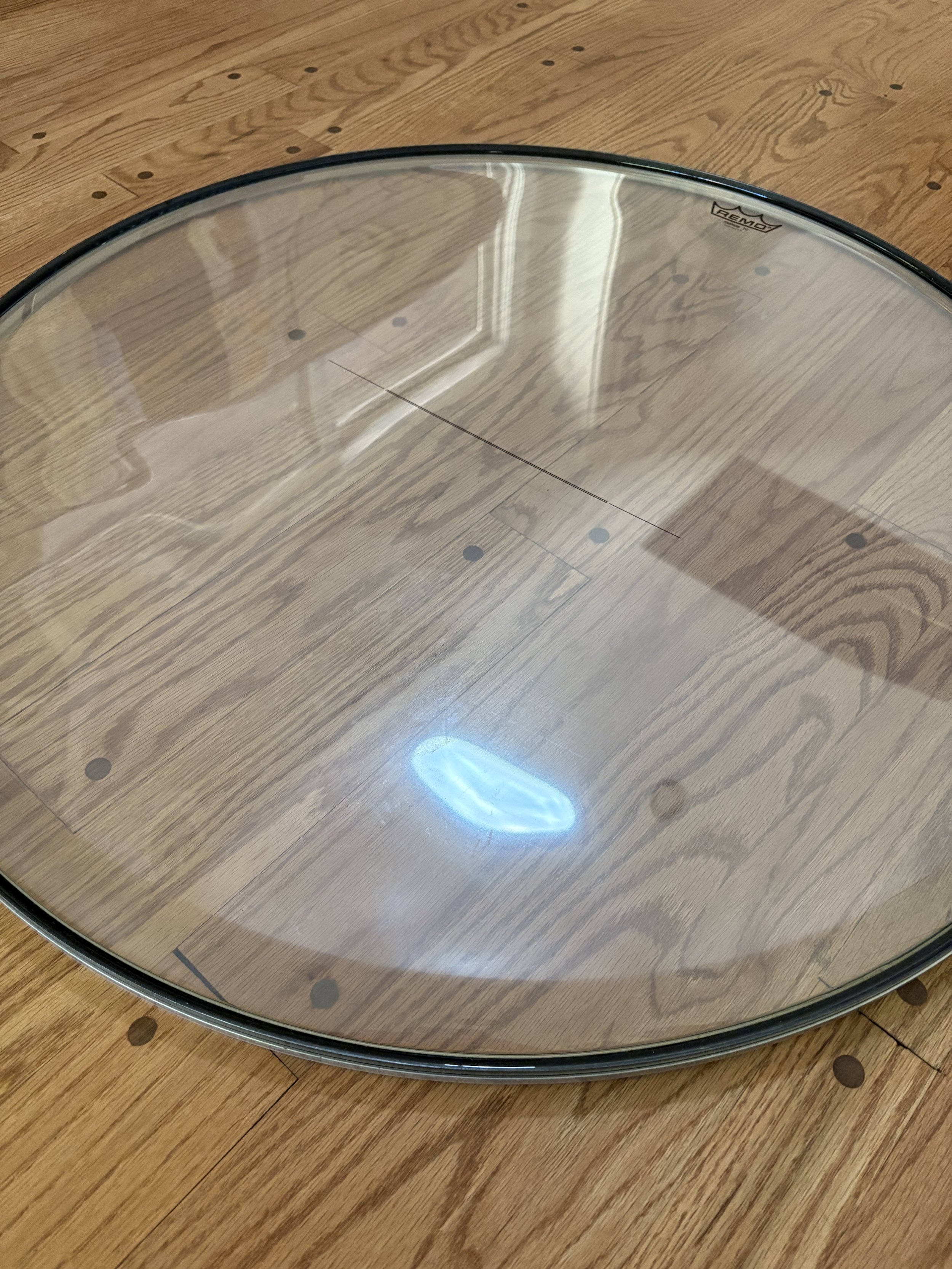
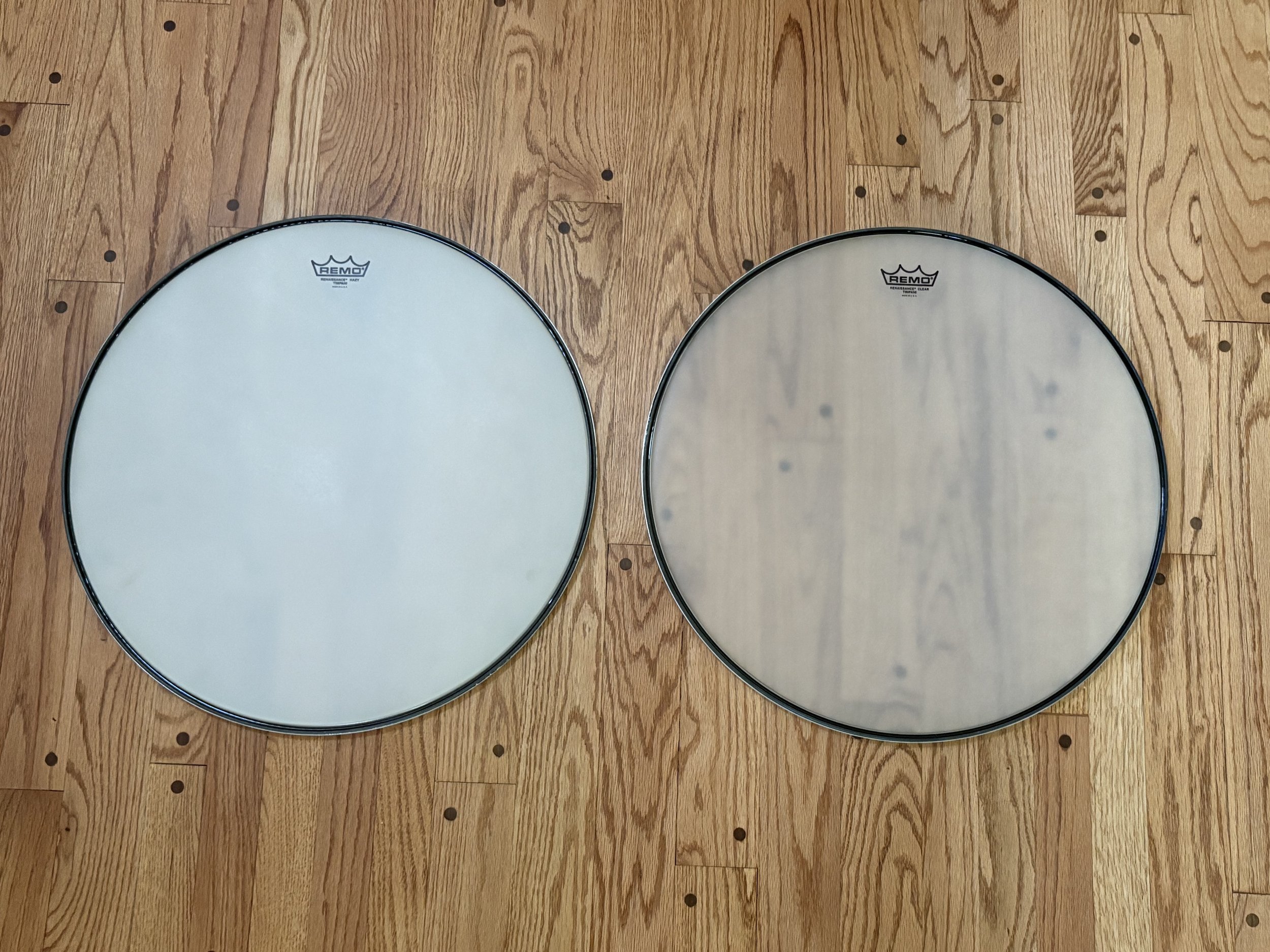
Clear heads produce a brighter, more open tone with longer sustain. They project well in large halls and work for repertoire that calls for clarity and resonance.
Coated (hazy) heads produce a warmer, more focused tone with shorter decay. They are more characteristic of the orchestral timpani sound and work well across a wider range of repertoire.
Most school programs are better served by coated heads. If you are replacing factory heads on Adams or Majestic drums, you are replacing coated heads — match what was there unless you have a reason not to. Not sure which head your drum shipped with? Send us the make and model and we can tell you.
Evans vs. Remo: what changes and what doesn't
Evans uses Level 360 Technology, which seats the head immediately. Remo heads require forming to the bowl shape by hand — you press the collar flat around the bearing edge before installing. Neither is better; they require different installation procedures.

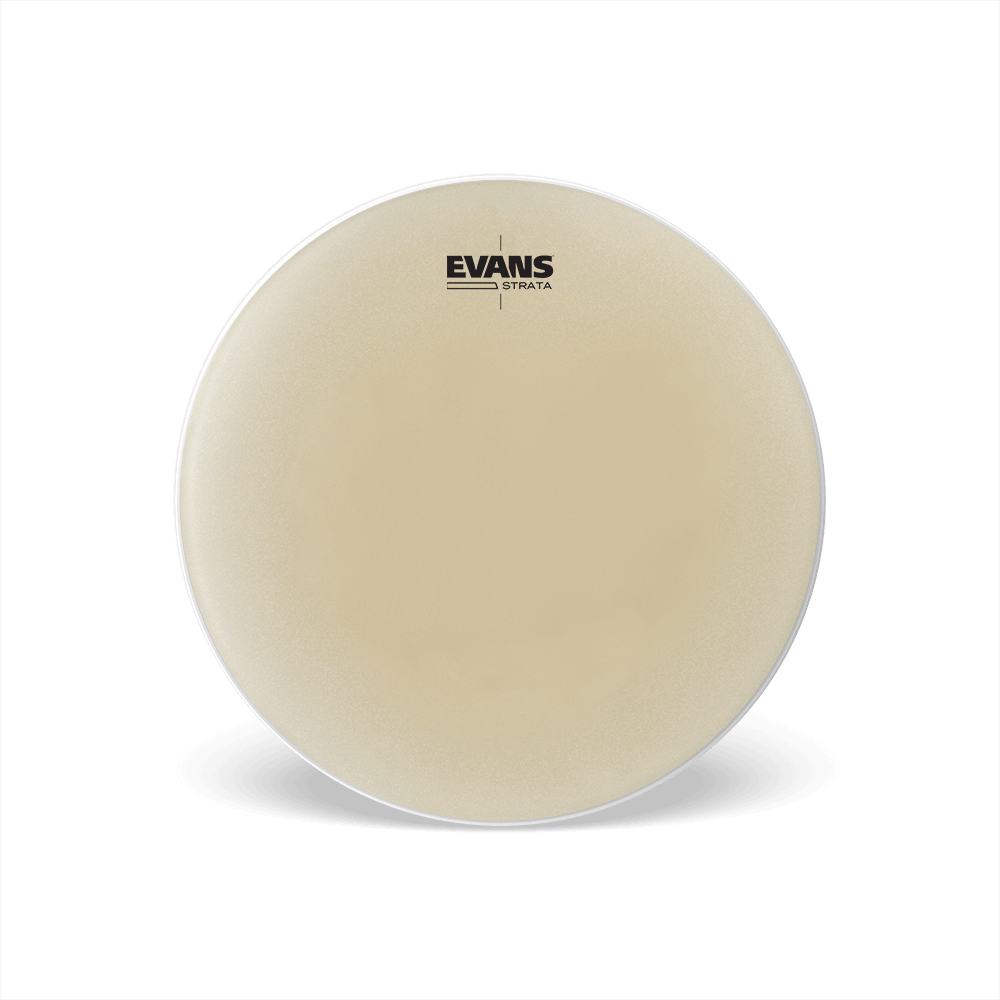
Evans lines: Strata (coated, mimics calfskin tone) and Orchestral (clear).

Remo lines: Renaissance (RC, professional grade, most common in schools and orchestras), Custom (TC, higher-end transparency), Standard (TI, most economical).
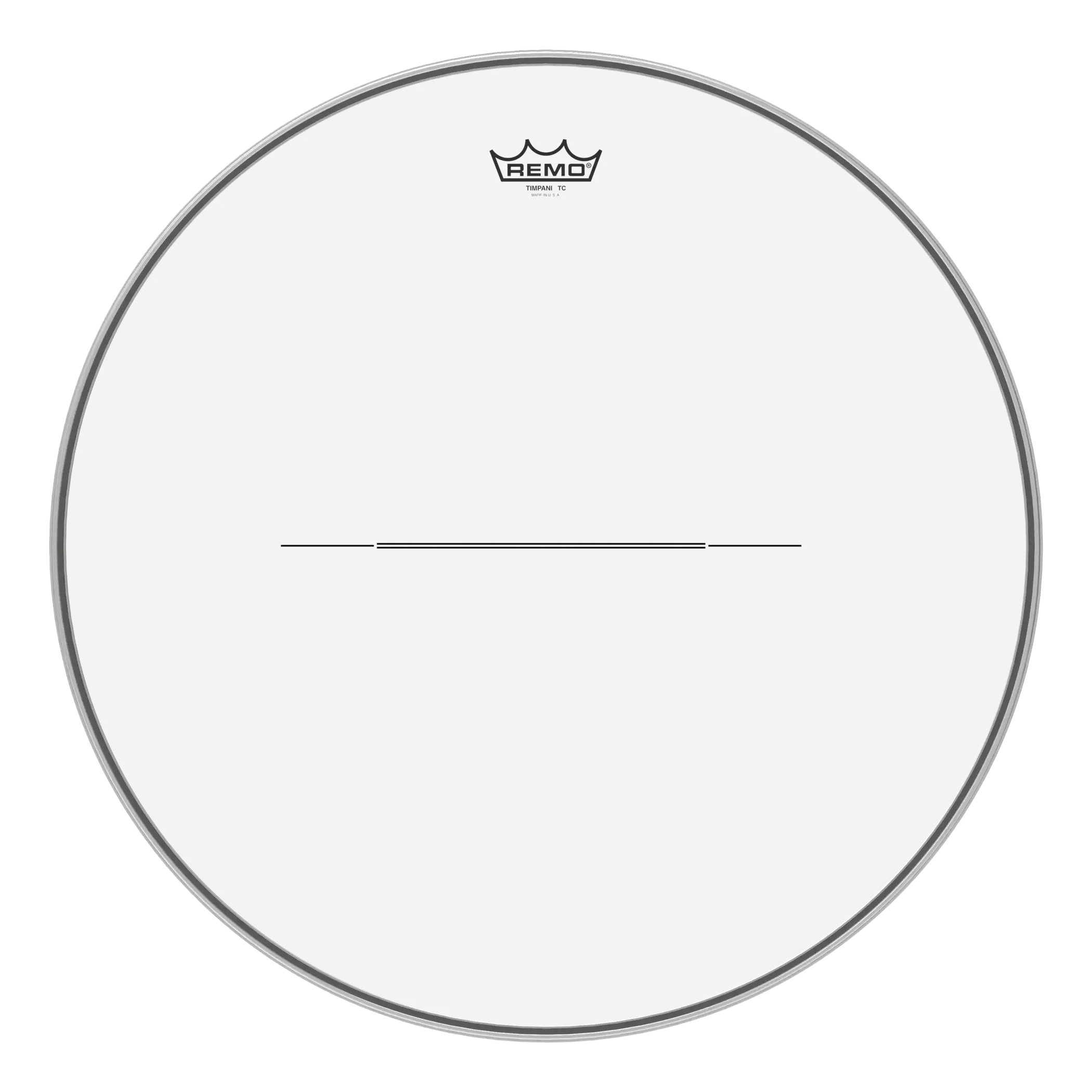
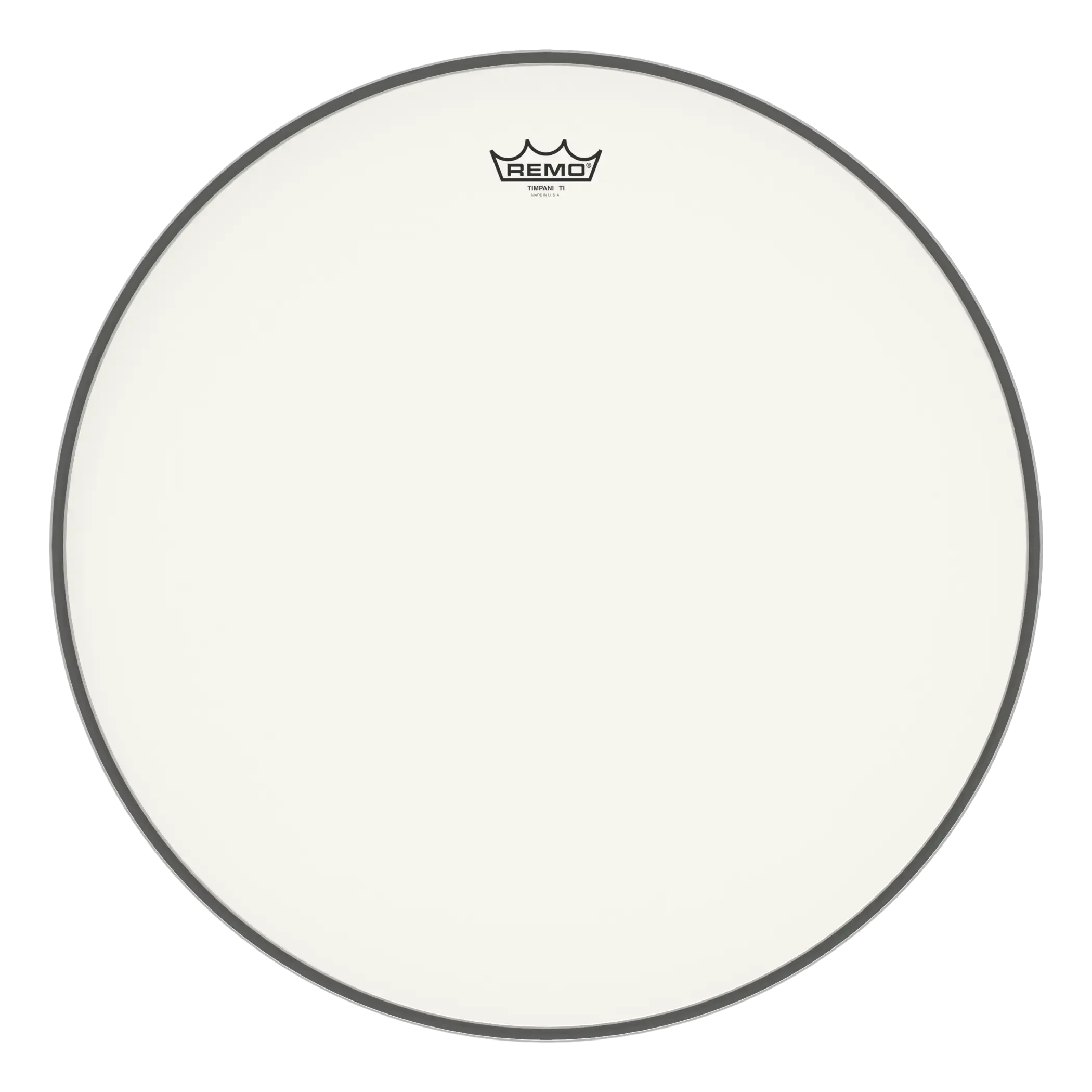
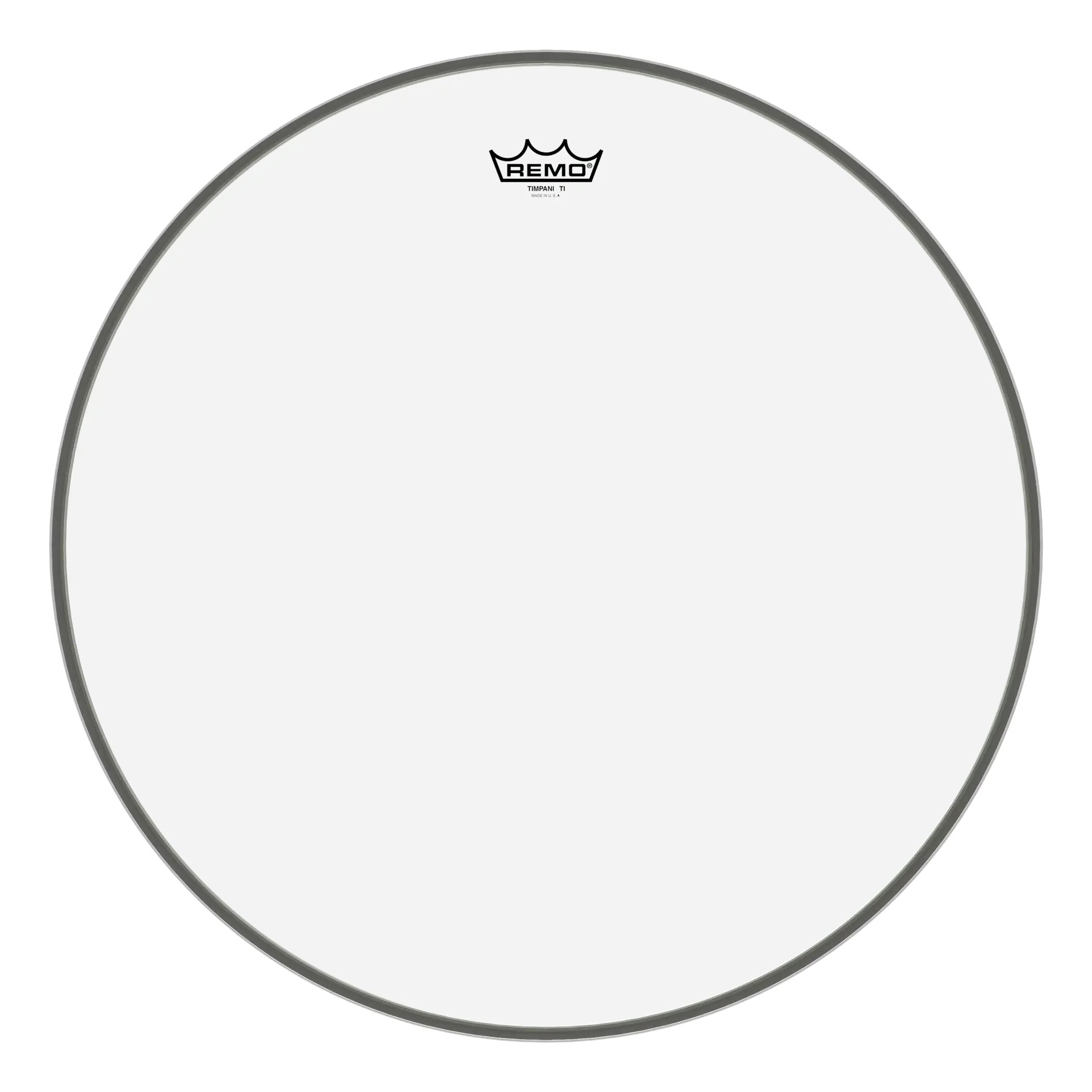
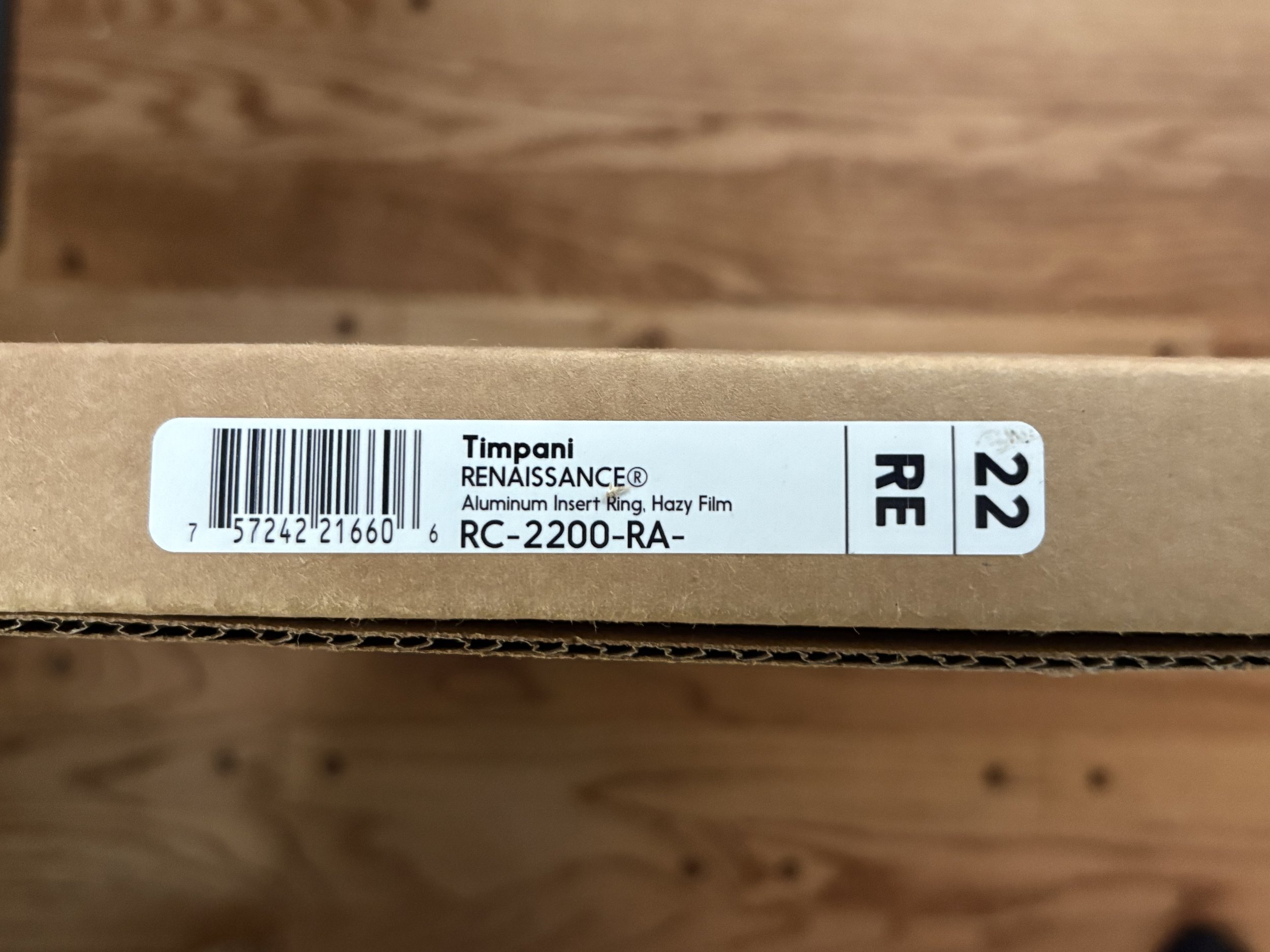
For a school program that wants a known standard, Remo Renaissance Hazy (RC head, aluminum insert, hazy coating) is what Adams and Majestic install from the factory. If your program has Adams or Majestic drums, that is a safe default.
Part 3: Insert material
The insert is the metal ring inside the flesh hoop. It adds rigidity and affects how evenly pitch distributes across the tension rods. Without an insert, tension inconsistencies read as uneven pitch — the drum is harder to clear and tune precisely.
Steel — high profile: Maximum projection and rigidity. Not compatible with older or smaller drums where clearance is limited.
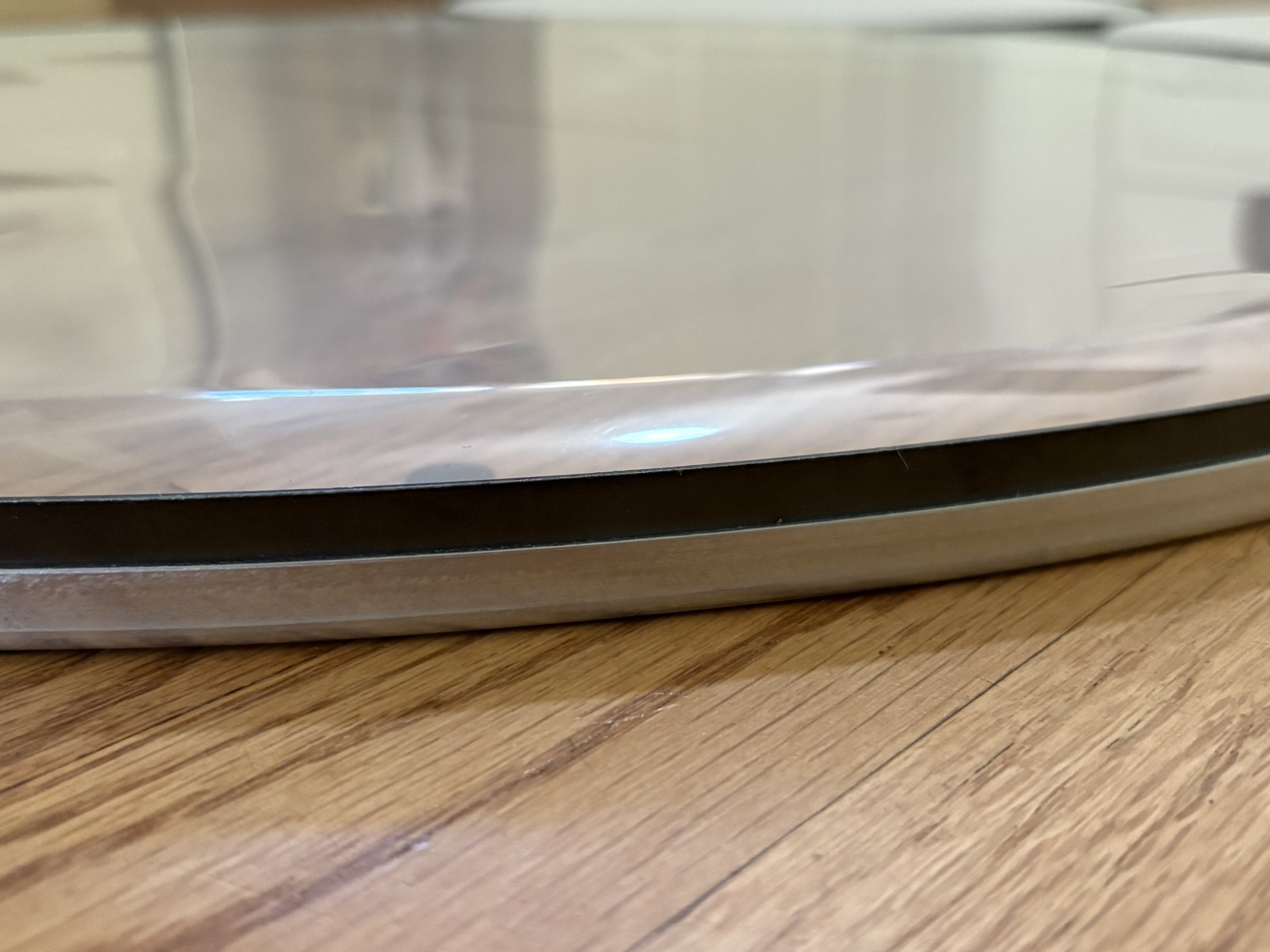
Steel — low profile: Modern drums. Improved projection over aluminum with the clearance to fit current designs.
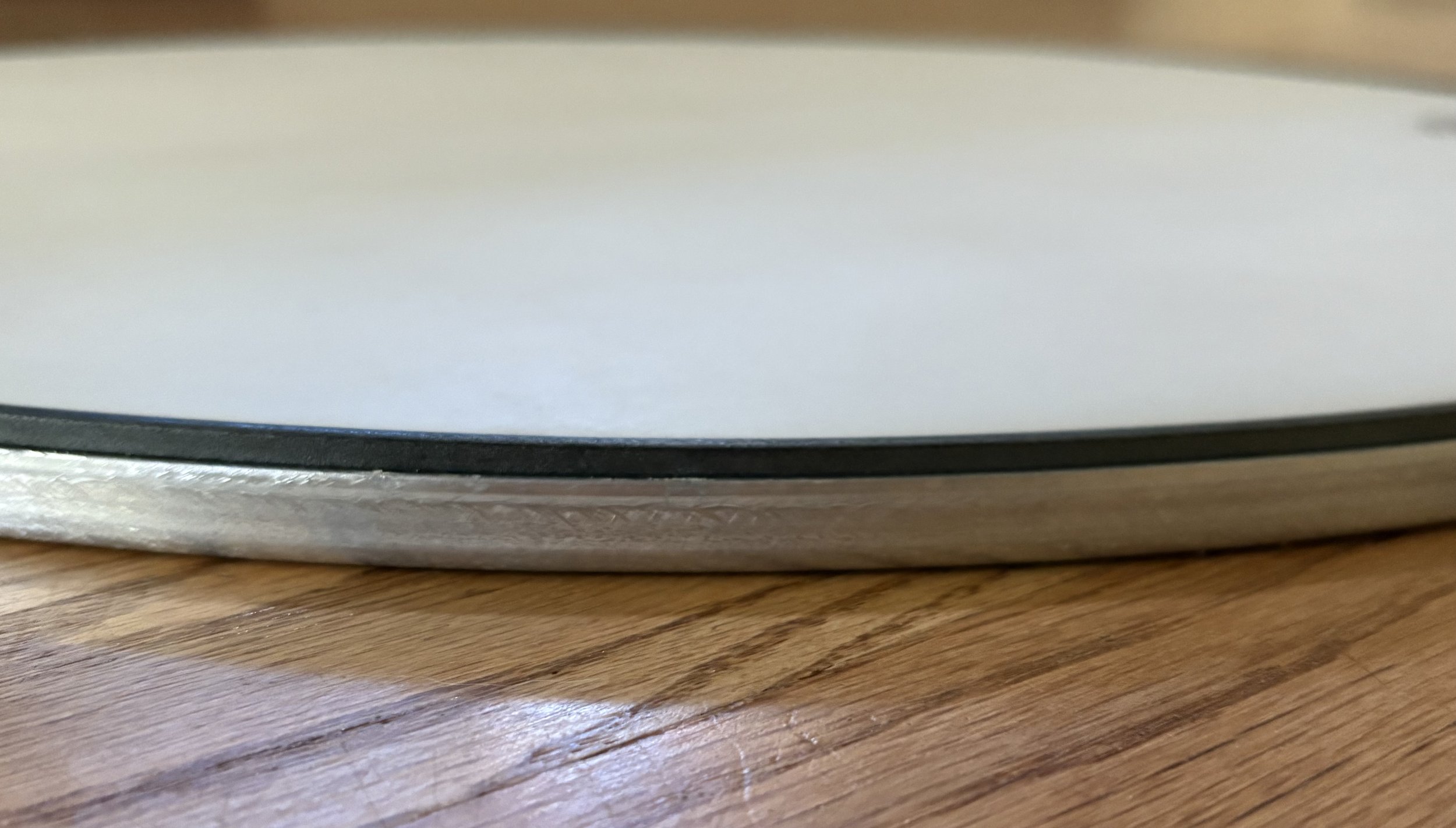
Aluminum: Corrosion-resistant, lighter, standard on most manufacturer drums. Sufficient for school and performance use.
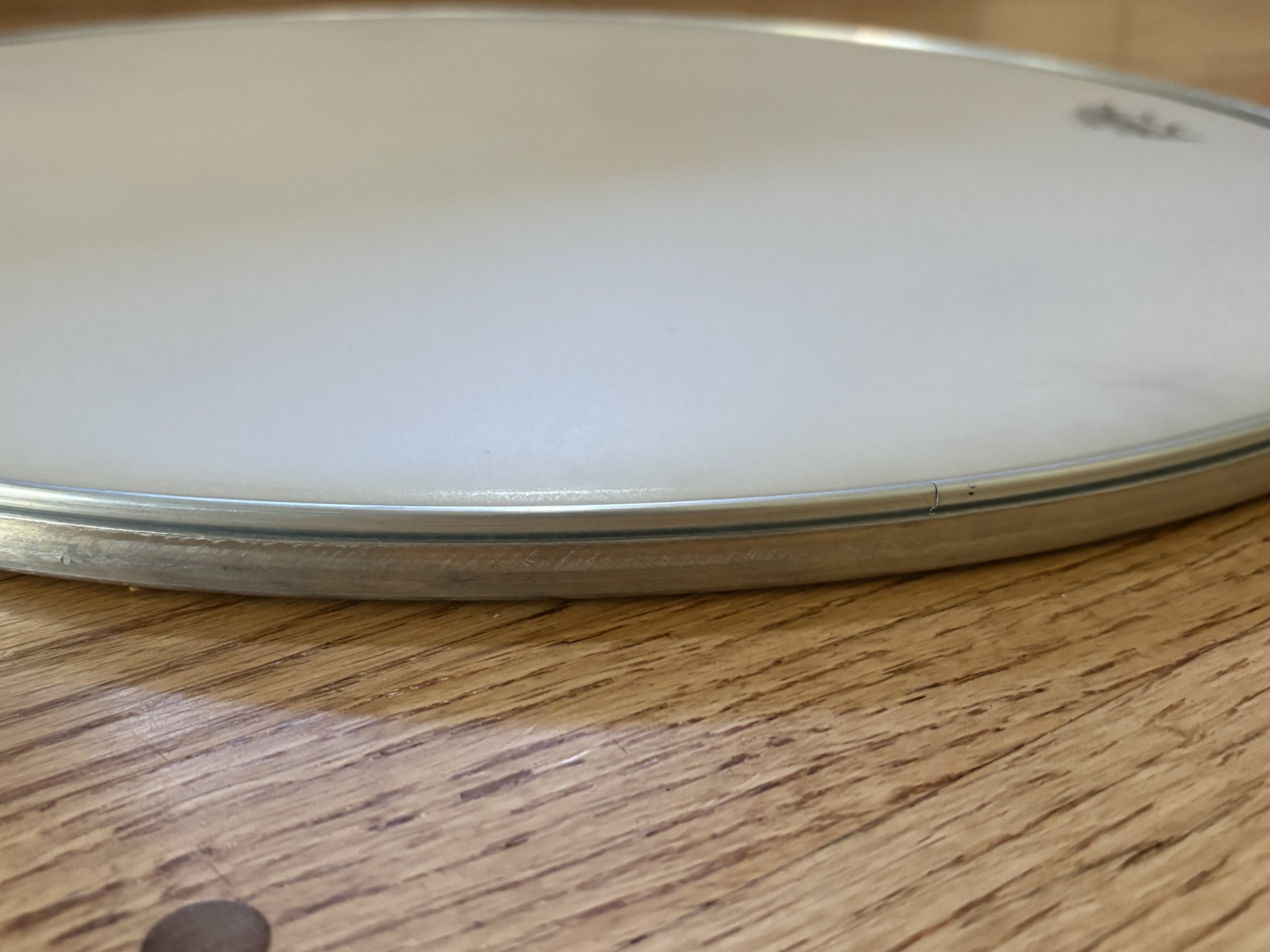
Evans uses low-profile steel as standard. Remo offers all three; aluminum and low-profile steel cover the majority of applications.
Reading SKU codes
Once you know what you need, reading catalog numbers saves time.
Evans format: Series prefix + diameter in inches. ET = Orchestral, EST = Strata. EST2425 is a 24¼" Strata head.

Remo format: Series + diameter code + insert/film suffix. RC = Renaissance, TC = Custom, TI = Standard. Diameter is encoded in 1/16" increments. Insert codes: R (aluminum), L (low-profile steel), S (steel). Film codes: A (hazy/coated), S (clear). A Remo RC head for a 26" Extended Collar drum with aluminum insert and hazy coating is RC-2812-RA.
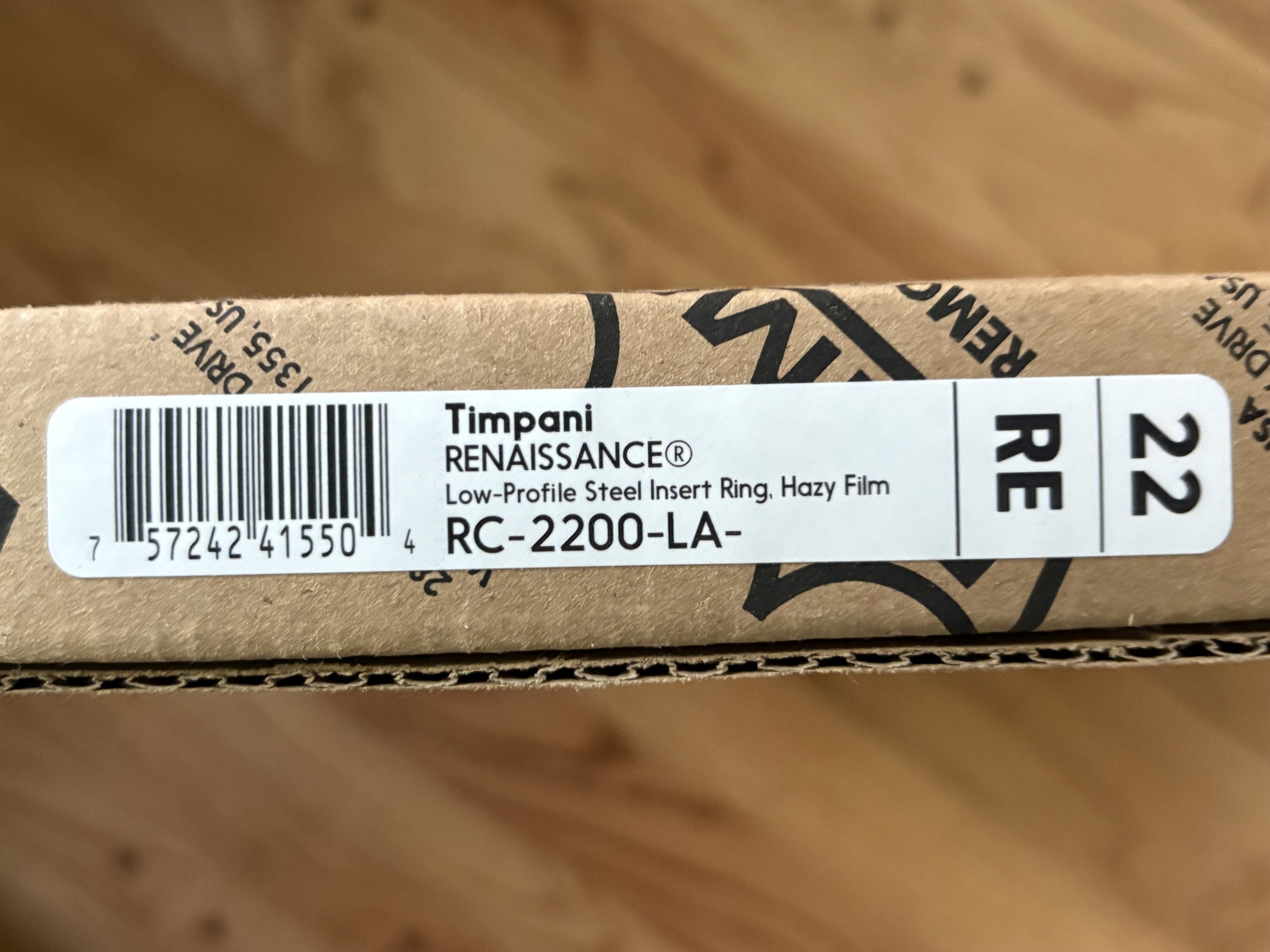
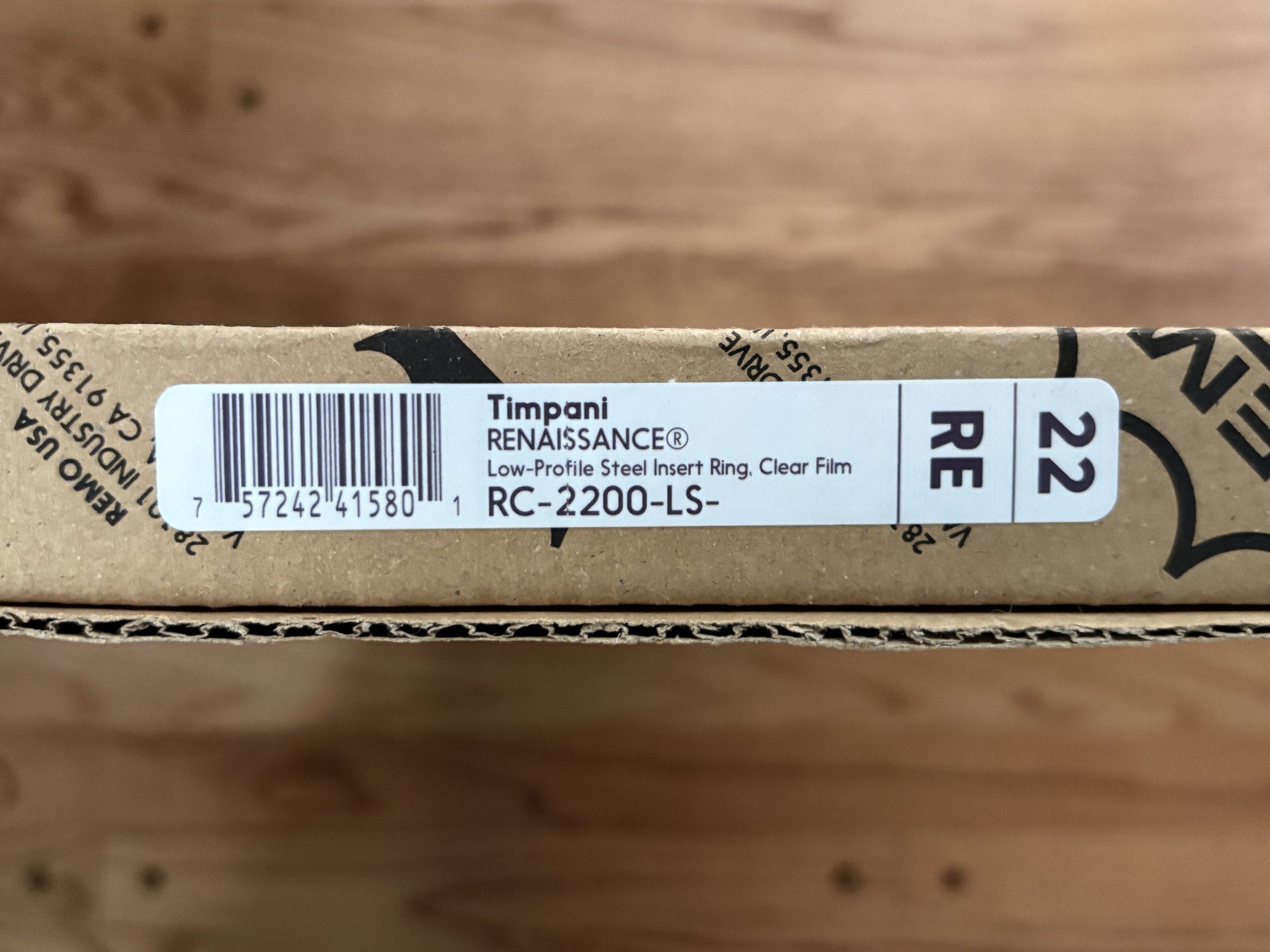
If the catalog number still does not make sense, call the supplier with your bowl diameter, collar type, and brand preference. They order by the number but they understand the drum. And if you'd rather have a professional handle the installation, timpani head replacement is part of our standard service work — we bring the tools to your facility.