A percussion inventory with maintenance intervals and a realistic budget prevents emergency repairs and budget surprises. Most programs that are reactive about percussion maintenance are not doing it on purpose — they just never built the structure that makes proactive maintenance possible. This is how to build that structure — or, if you'd rather hand the service side off entirely, our scheduled maintenance programs handle the visits and work for you.
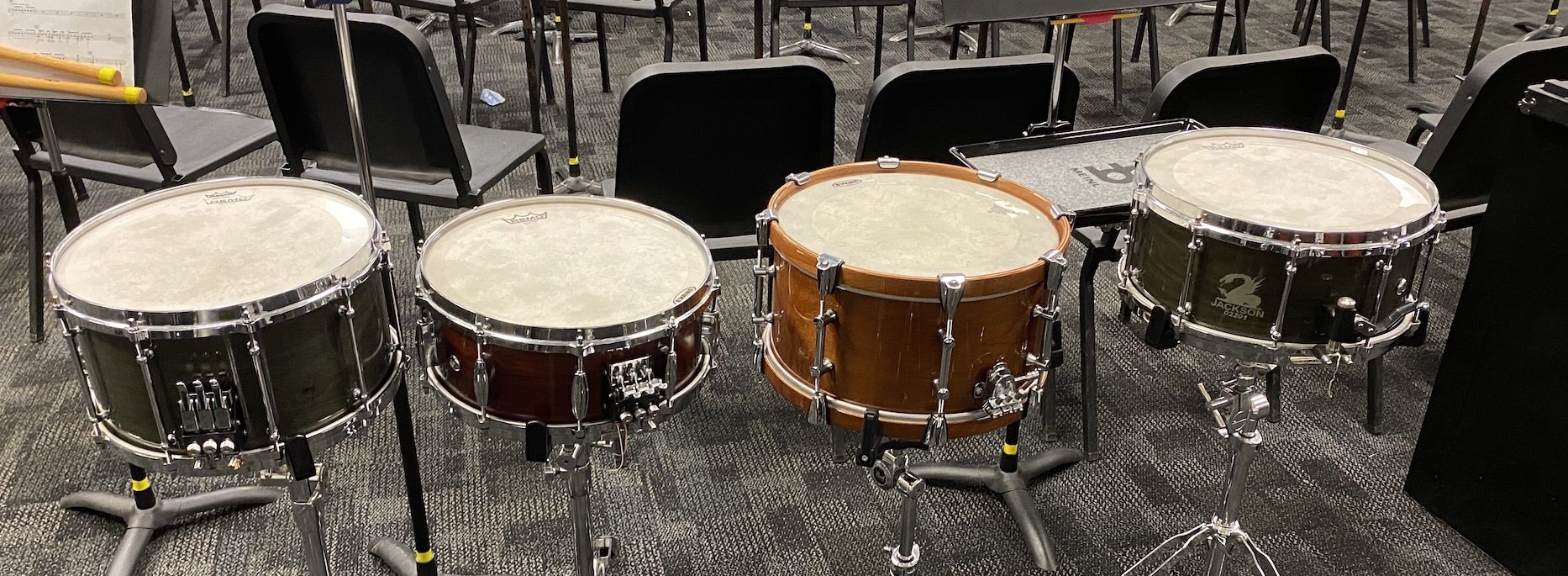
Why a repair schedule matters
Percussion instruments wear predictably. Heads stretch, strings break, hardware loosens. The instruments that fail during performances are almost always the ones that have been declining gradually for months. Scheduling maintenance does not prevent wear — it prevents the wear from becoming a crisis.
The parallel to vehicle maintenance is exact: the car that breaks down on the highway is rarely one that was maintained on schedule. The one that breaks down is the one where the warning signs were visible for six months and nobody acted on them.
Building your inventory
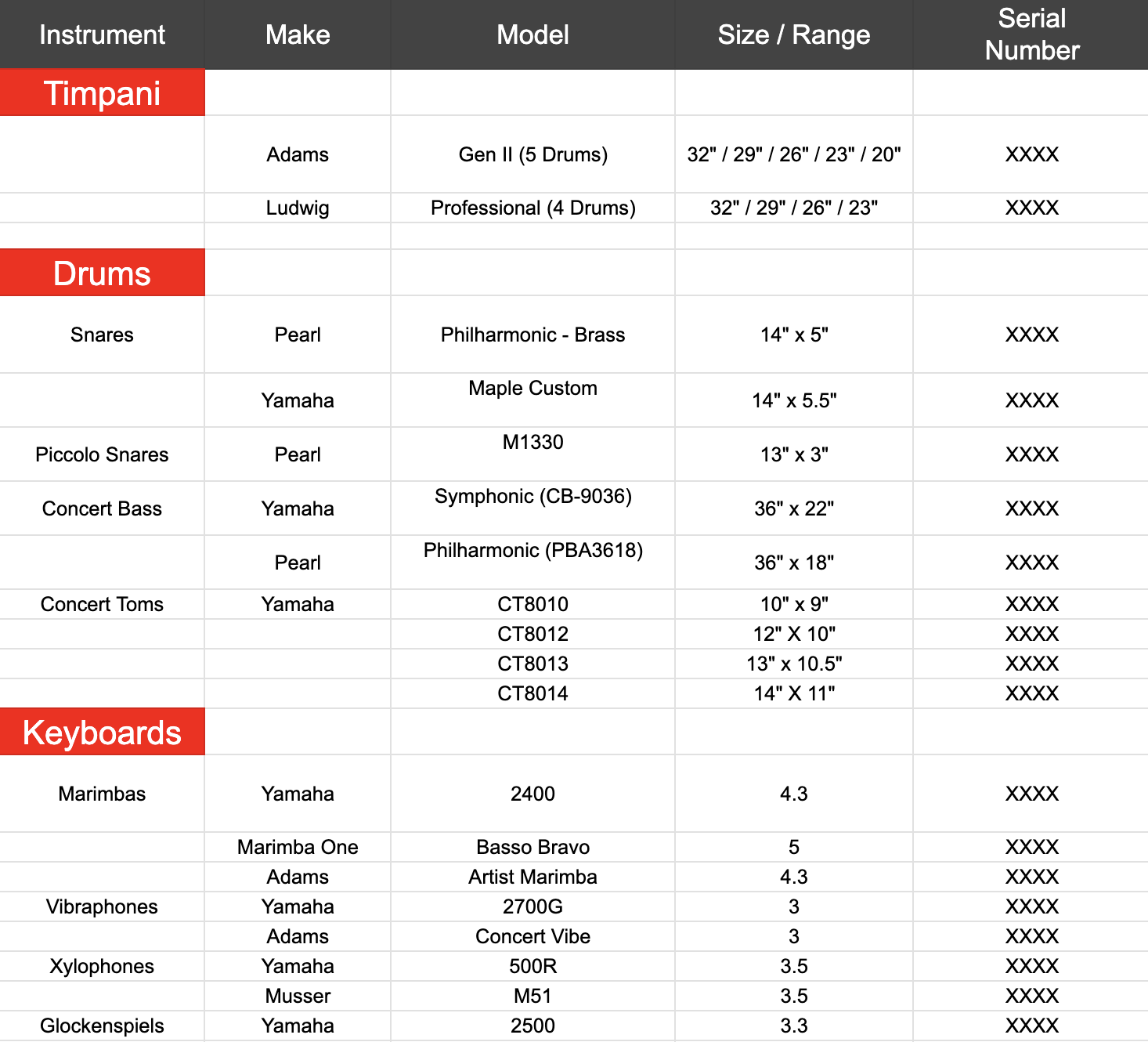
Start with a list, not a spreadsheet. Walk through your storage room and write down everything. Then build the record around each item:
- List all equipment by category — concert, marching, drum set, auxiliary
- Document specifications — manufacturer, model number, size, serial number. This matters when you are ordering heads or parts and need to get it right the first time.
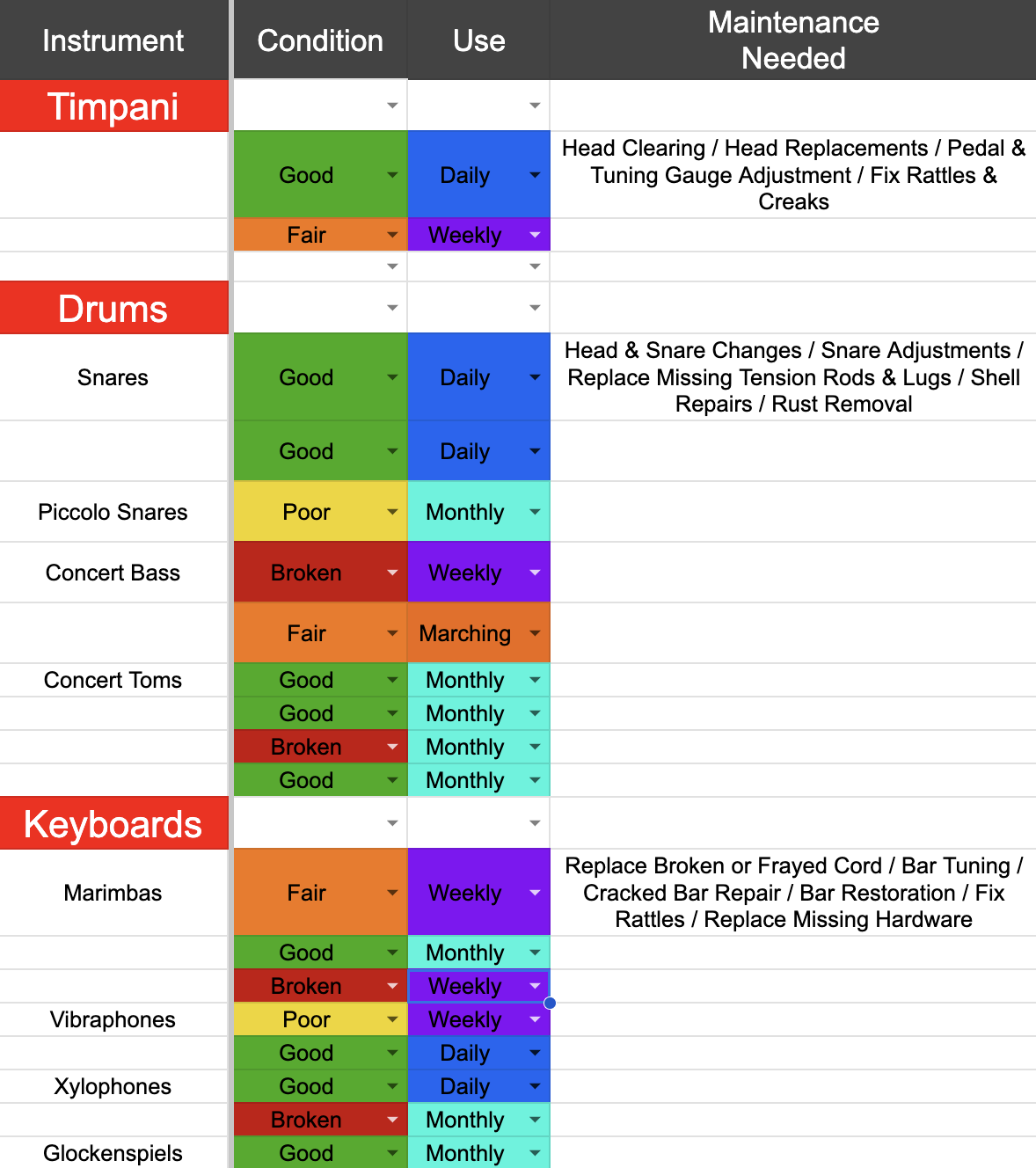
- Assess current condition using four ratings: great, good, fair, poor. If something is broken and not in service, list it separately.
- Track usage frequency — daily, weekly, monthly, or seasonal. A drum used daily needs attention more often than one that comes out for one concert a year.
- Identify maintenance types needed — drums need head and snare attention; keyboards need cord and bar work; timpani need heads, pedals, and gauges.
- Categorize maintenance level — light (cleaning and inspection), moderate (head replacement, restringing), heavy (professional repair, structural work).
Setting maintenance intervals
A rotating schedule by season prevents everything coming due at once. A workable default:
- January: Accessories and cymbals
- April: Bass drums and stands
- July: Keyboards and marching equipment
- October: Timpani and snare drums
Adjust these to your program's performance calendar. The point is that every category gets attention once a year on a predictable schedule, not only when something breaks.

A weekly maintenance routine
Small regular attention prevents the larger issues from developing. Three days of the week cover the work:
- Monday: Maintenance Monday — light fixes, tightening, cleaning after the previous week's use
- Wednesday: Wing Nut Wednesday — check and tighten all hardware on drums and stands
- Friday: Fix It Friday — address anything that needs more than five minutes, or tag it for the professional schedule
Student leadership can run this with minimal staff time. The director's job is to check in, not to do the work.
Building the budget
A repair budget that gets approved is one that comes with documentation. A budget that comes without documentation gets cut first.
For each category in your inventory, estimate:
- What maintenance is needed in the next 12 months
- What that maintenance costs — our repair pricing list gives you real numbers to work from, covering heads, keyboard work, and most common percussion repairs
- Whether anything is approaching end-of-life and needs replacement budgeting
Allocate 10–20% of your estimated maintenance cost as an emergency reserve. Not every problem arrives on schedule.

Practical budget strategies that work:
- Buy consumables (heads, strings, lubricant) in bulk — the per-unit cost drops significantly
- Track actual spending quarterly, not annually — this lets you adjust before you are over budget
- Document every repair with photographs — this creates the justification for next year's request
- Separate maintenance budget from capital equipment budget — conflating the two makes both harder to defend
The first year is the hardest
In the first year of running this system, you are doing the inventory assessment, building the records, and catching up on deferred maintenance simultaneously. That is more expensive than a steady-state program where maintenance is current.
Commit to one full year of documentation. After that, the data from year one tells you exactly what year two will cost, and those numbers are easier to defend than estimates.